
First aid for bite wounds
Overview
- Always have your pet checked by your vet if they have been bitten or attacked.
- Bite wounds very often get infected because mouths are so full of bacteria. They also tend to be more serious than they look because of hidden damage below the skin.
- Snakebites are especially dangerous and should be treated ASAP.
What to do if your pet has been bitten
Step one: Assess your pet
- Do they seem otherwise OK? Do they have any other injuries? Are they in shock?
- If you are worried about your pet, cover their wounds, keep them warm and take them straight to your vets.
Step two: Assess the bite wound
- Small and not bleeding - move to step three.
- Bleeding heavily - apply pressure with a dry, clean dressing and go straight to your vets.
- Areas of skin missing - cover the wound with a clean, dry dressing and go straight to your vets. If your pet seems painful when you try to cover the wound or you don’t have a dressing available then don’t try to cover the area as you may cause more damage.
- Snakebite - put an ice pack (wrapped in a towel) on the bite, and take your pet straight to the nearest vets.
Step three: Flush the wound
- If your dog has a small bite wound that isn’t bleeding heavily, flush it with lukewarm, salty water* to remove as much bacteria as possible. Rinse for as long as your dog will tolerate.
- *Make salt water by adding 1 teaspoon of salt to a pint of cooled (previously boiled) water.
Step four: Book an appointment with your vet
Bite wounds should always be checked by a vet because they are often more serious than they look, and are likely to get infected.
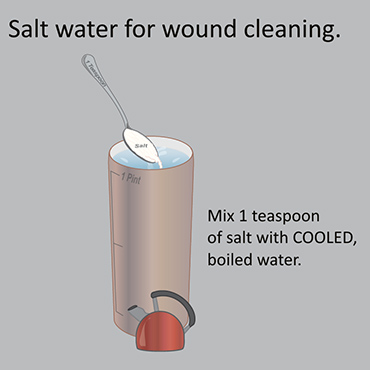
Make salt water by adding 1 teaspoon of salt to a pint of cooled (previously boiled) water. Click image to enlarge.
Published: March 2020
Did you find this page useful?
Tell us more
Please note, our vets and nurses are unable to respond to questions via this form. If you are concerned about your pet’s health, please contact your vet directly.
Thank you for your feedback
Want to hear more about PDSA and get pet care tips from our vet experts?
Sign up to our e-newsletter
Written by vets and vet nurses. This advice is for UK pets only. Illustrations by Samantha Elmhurst.