
Modern Slavery and Human Trafficking Statement
Introduction
This statement is made pursuant to Section 54 of the Modern Slavery Act 2015.
It relates to the financial year 1 January 2025 to 31 December 2025. This statement covers the activities of The People’s Dispensary for Sick Animals and its three wholly owned subsidiaries, PDSA Trading Limited, PDSA Property Services Limited, and PDSA PetAid Enterprises Limited.
This statement sets out PDSA’s commitment to identifying, reducing and eliminating slavery and human trafficking within its organisation and its supply chains.
We acknowledge our responsibility to comply with the principles of the Modern Slavery Act 2015 and to continuously improve our approach in line with relevant legislation and good practice.
Structure and Supply Chains
PDSA was founded in 1917 by Maria Dickin with the aim of alleviating poverty and improving the welfare of pets. We deliver veterinary support to those in need, alongside preventive and educational services.
We have a variety of supply chains providing goods and services that support frontline delivery and internal functions. The majority of our suppliers and contractors are based in the UK or the EU. We recognise that modern slavery may exist within supply chains without our knowledge, and we are committed to continuously improving our processes to identify, reduce and eliminate this wherever possible.
Our risk categorisation system is partially informed by external sources such as the Global Slavery Index (by country and industry) and by the ILO indicators of forced labour.
High Risk Countries
| India | Mauritania | Russia |
| China | Saudi Arabia | Afghanistan |
| Pakistan | Türkiye | Kuwait |
| North Korea | Tajikistan | Eritrea |
| United Arab Emirates |
High Risk Industries
| Events | Cleaning | Electronic / Technology (including solar panels) |
| Consumer goods | Low skilled manual jobs | Textiles & garments |
| Construction | Palm oil | Recycling |
| Car washes | Hotels & accomodation |
Source: Global Slavery Index | Walk Free Modern
Modern Slavery and Indicators of Forced Labour
We use the definition of forced labour specified in the International Labour Organization Forced Labour Convention, 1930 (No. 29): “all work or service which is exacted from any person under the menace of any penalty and for which the said person has not offered himself voluntarily”.
We reference the ILO’s eleven indicators of forced labour as common signs that may indicate forced labour:
- Abuse of vulnerability
- Deception
- Restriction of movement
- Isolation
- Physical and sexual violence
- Intimidation and threats
- Retention of identity documents
- Withholding of wages
- Debt bondage
- Abusive working and living conditions
- Excessive overtime
Source: ILO indicators of Forced Labour | International Labour Organization
Policies
PDSA has an Ethical Statement, which is shared with contractors and forms part of our contracting expectations. PDSA also has policies supporting safe and fair working practices, including those covering recruitment, grievances, harassment and bullying, whistleblowing and safeguarding.
Due Diligence Processes
PDSA’s Supply Chain Team provides support and guidance in relation to procurement activities. As such, our supplier onboarding and questionnaires include modern slavery considerations, we have contract clauses relating to modern slavery and PDSA’s Ethical Statement, and routes for employees to raise concerns, which are escalated for review and action.
In addition, provider onboarding includes mandatory completion of a statement confirming that modern slavery does not form part of the provider’s business (and, where relevant, their supply chains). PDSA also uses credit check software, which captures adverse or negative information and untoward event history for companies under review, providing additional oversight.
Modern Slavery Project Group
The Modern Slavery Project Group is sponsored by the Director of Finance & Resources, led by the Head of Supply Chain and includes cross-organisational representation, including veterinary services, corporate partnerships, digital/data/security, and retail & buying.
During 2025, the Project Group’s work was impacted by organisational restructuring, and the Group did not meet during the second part of the year. However, core due diligence controls remained in place, including onboarding declarations, contractual modern slavery clauses and additional oversight via credit checks.
During 2026, we will:
- Resume quarterly Project Group meetings to review risk areas, assessments and actions.
- Continue to build awareness, education and engagement across the organisation.
- Keep up to date on modern slavery-related legislation and good practice, and update our approach accordingly.
- Evaluate, improve and update the modern slavery procedure (including migration to the standardised template).
- Continue expanding supplier coverage, prioritising suppliers with annual spend over £100,000 and suppliers in identified high-risk areas.
- Agree and implement KPIs to measure performance and effectiveness (e.g., supplier coverage, number of assessments completed, remediation actions closed, training/awareness activity, and timeliness of re-assessment).
- Introduce supplier self-certification within quarterly supplier clinics (commencing Q1 2026), covering modern slavery and any other areas of non-compliance with contractual requirements, to strengthen ongoing assurance and provide an auditable record of supplier attestations.
Our Commitment
We recognise the impact our procurement, purchasing and partnerships activities can have on reducing modern slavery in the UK and around the world. We are committed to continuous improvement and to appropriately challenge our suppliers, contractors and partners.
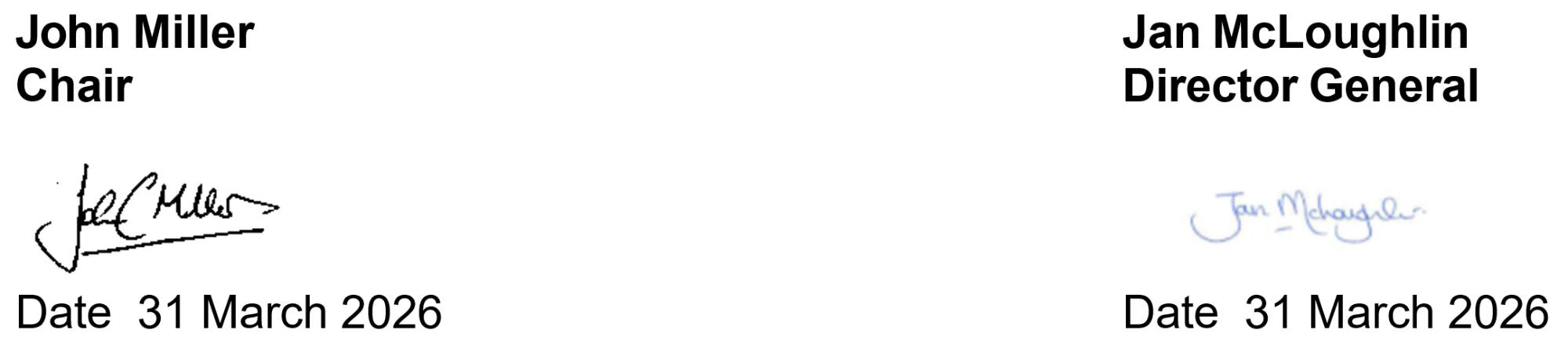
This Modern Slavery and Human Trafficking Statement was approved by the Trustees at its Council meeting on 26 March 2026.
Page last updated: 31 March 2026