
A pet health inequality crisis is looming in the UK as the cost of living crisis and the rising cost of pet ownership – known as ‘petflation’ – combine.
As a nation of pet lovers, it’s natural that we want to do everything we can to keep our pets safe, healthy, and happy, offering them the best life possible. And when our pets become ill, we want to provide the best possible care.
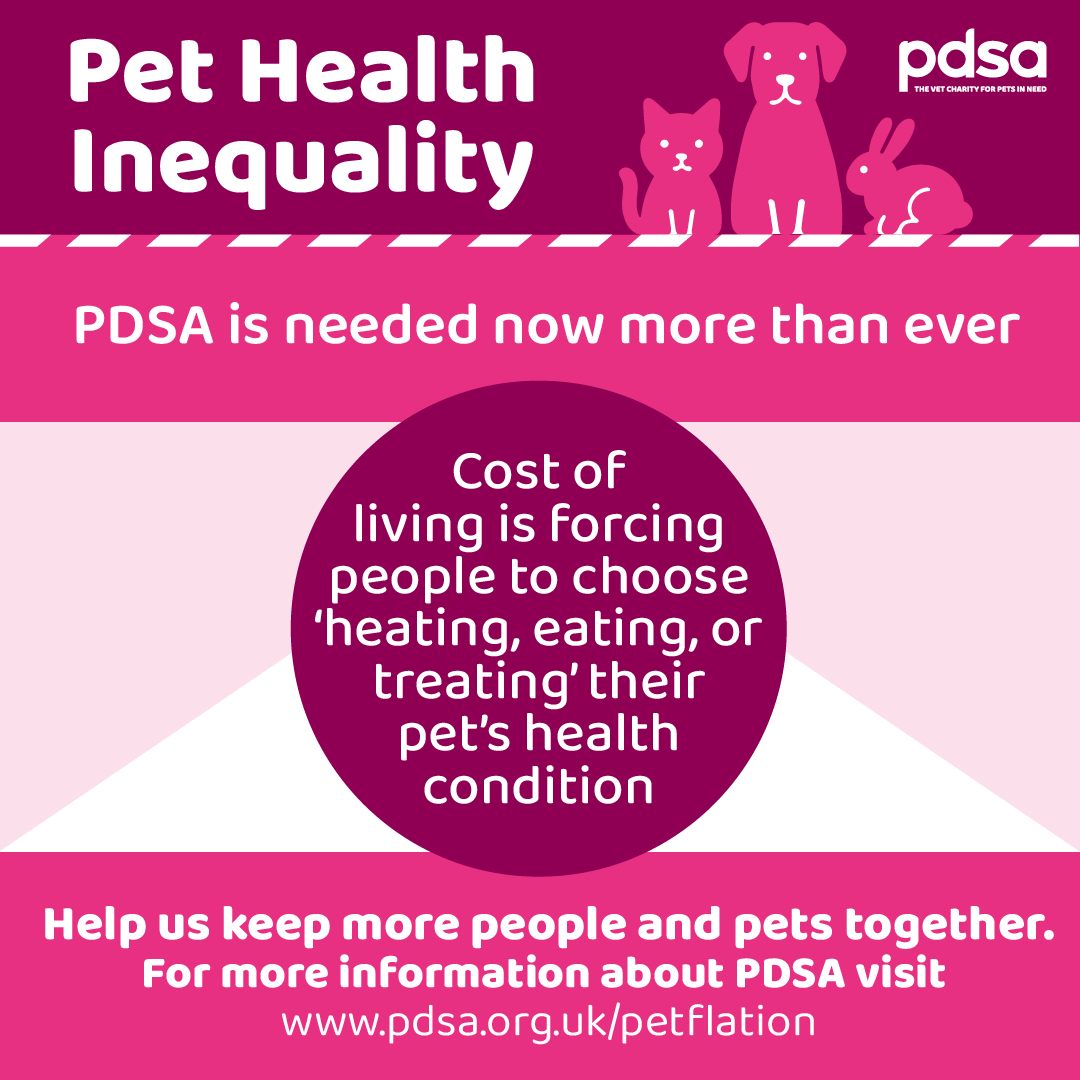
But what happens when there’s a sustained cost of living crisis and more and more people start to struggle with the cost of pet ownership, forcing them to make unthinkable choices between heating and eating, and caring for their pet?
Our first‑ever Pet Health Inequality Report, released in April 2026, explores how rising costs are affecting pet owners across the UK, the impact on pet health and wellbeing, and what must be done to keep people and pets together. It spotlights the growing pressures and difficult decisions facing many pet owners, shines a light on the realities of pet ownership in 2026, and examines the rise of “petflation”, which is placing increasing pressure on pet‑owning households.
Our report found that over 1 in 5 (22%) of UK pet owners say pet ownership is more expensive than they thought. This is creating conditions where our nation of pet lovers is being forced to “make difficult and sometimes devastating decisions.”
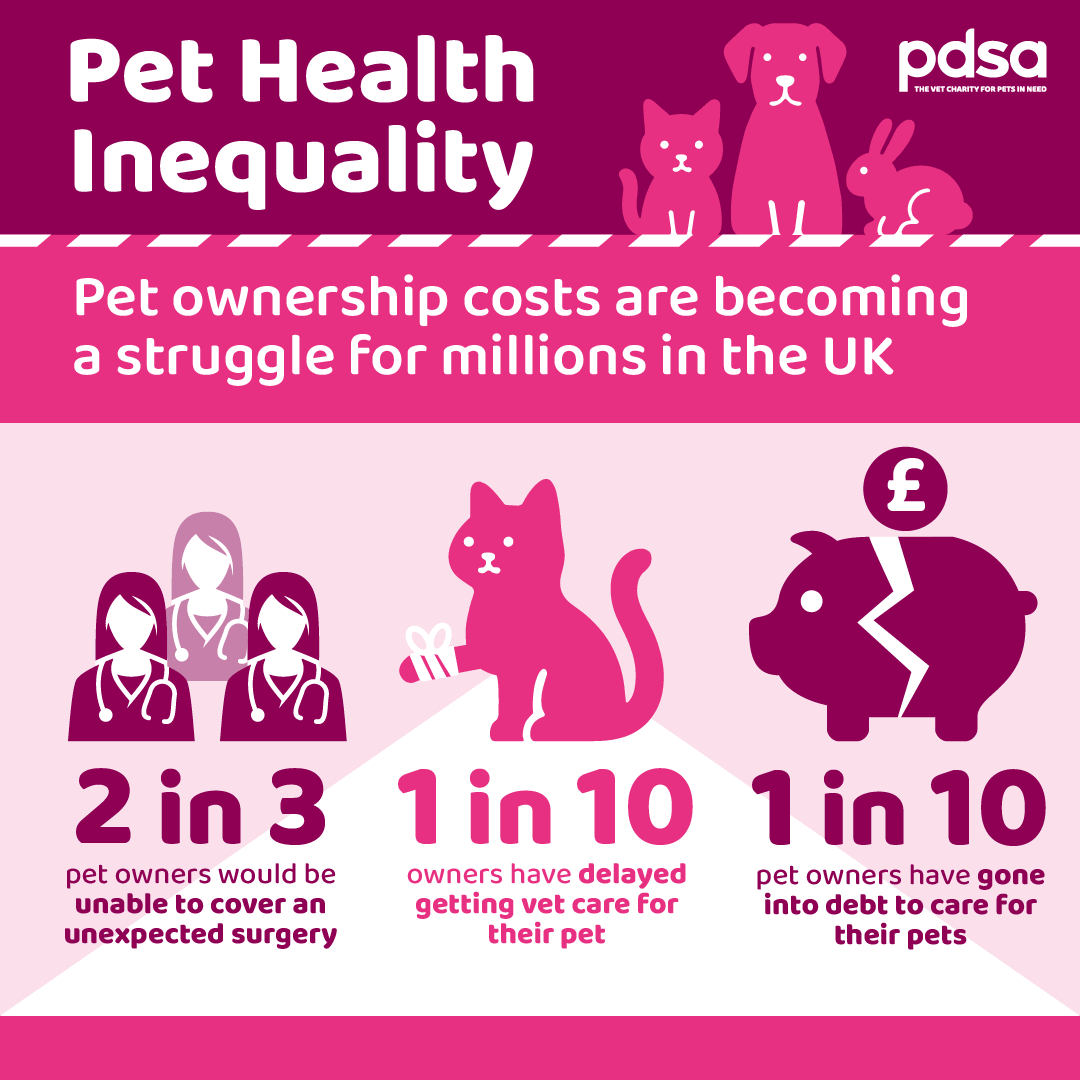
2 in 3 UK pet owners are unable to cover costs for unexpected vet surgery
Key findings from the PDSA Pet Health Inequality Report
-
Personal sacrifices are becoming increasingly common
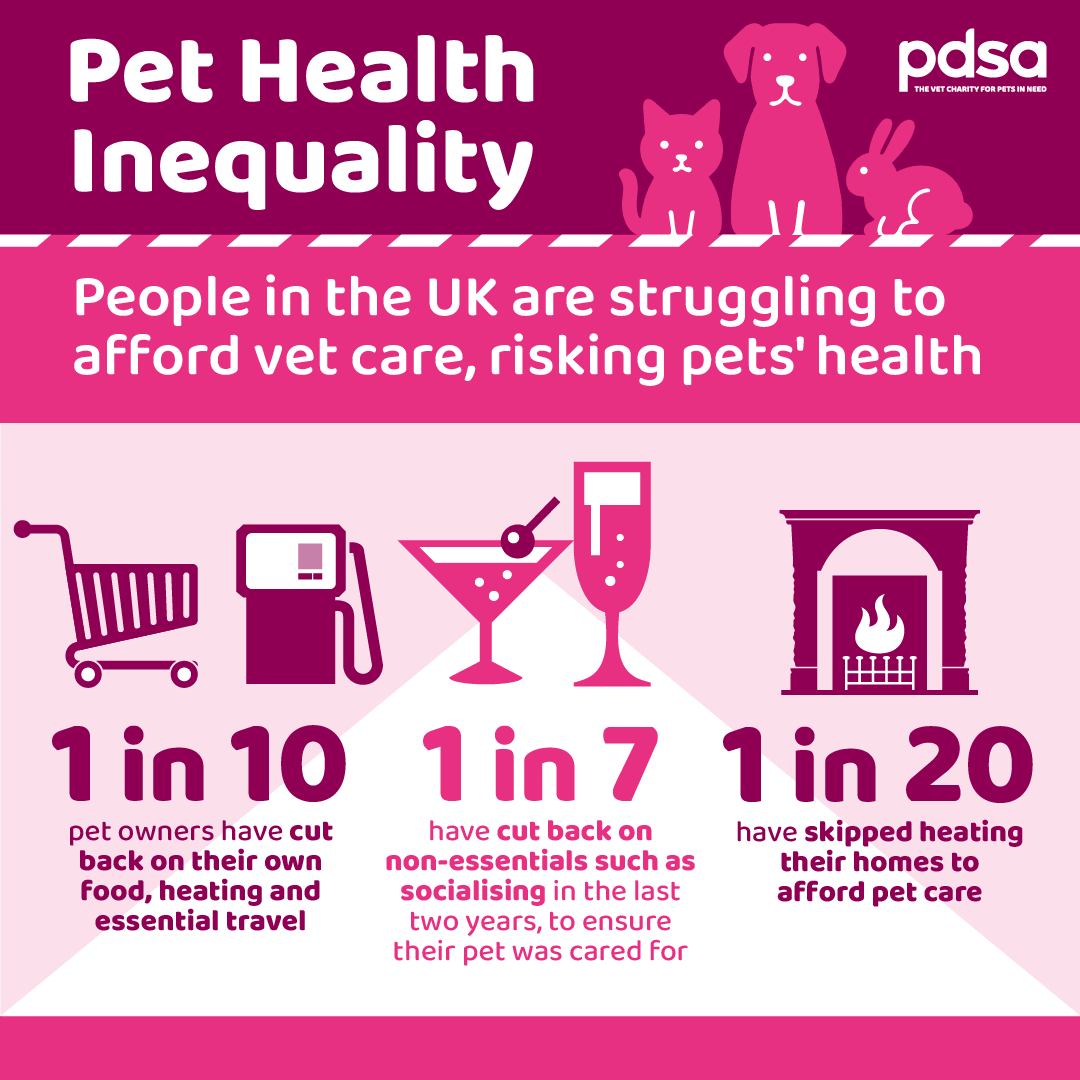
1 in 10 of UK pet owners say they have cut back on their own food, heating, or essential travel to afford pet ownership. Over 1 in 7 have cut back on non‑essentials such as socialising in the last two years to ensure their pet was cared for, and almost 1 in 20 have skipped heating their homes to afford the cost of pet care.
-
Rising living costs are taking an emotional toll
61% of UK adults reported an increase in their cost of living bill last year, contributing to financial and emotional pressure for pet owners, with over 1.5 million experiencing sleepless nights as a result.
-
Access to veterinary care is increasingly at risk
2 in 3 UK pet owners say they would be unable to cover the cost of an unexpected surgery for their pet. Almost 1 in 10 (9%) have gone into debt to care for their pets, while 11% have delayed a visit to the vets, meaning around 3 million pets may not have received timely veterinary care.
Explore the findings in full by downloading the PDSA Pet Health Inequality Report below.
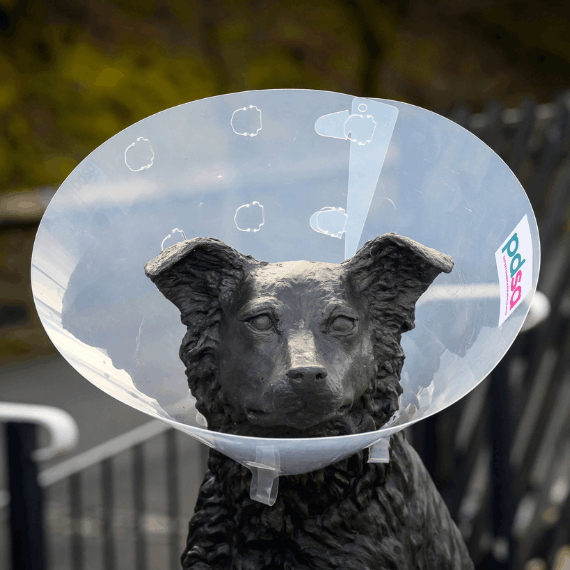
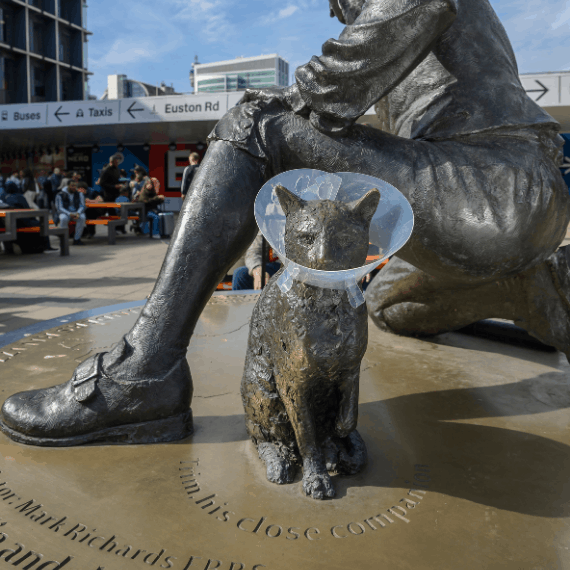
Iconic pet statues, Ruswarp at Garsdale station and Trim at Euston station, shown in a vet cone to highlight the pet health inequality crisis.
The impact on people and the pets they love
Tracey Lancashire, 62, from Stockport, lives with her Shih Tzu, Rosie, and receives support from PDSA.
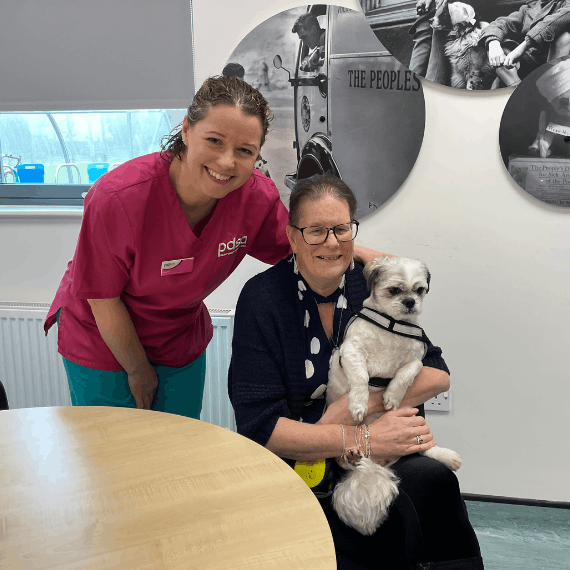
Like many pet owners affected by rising costs, Tracey has faced the emotional strain of worrying how to afford the care her much‑loved pet needs.
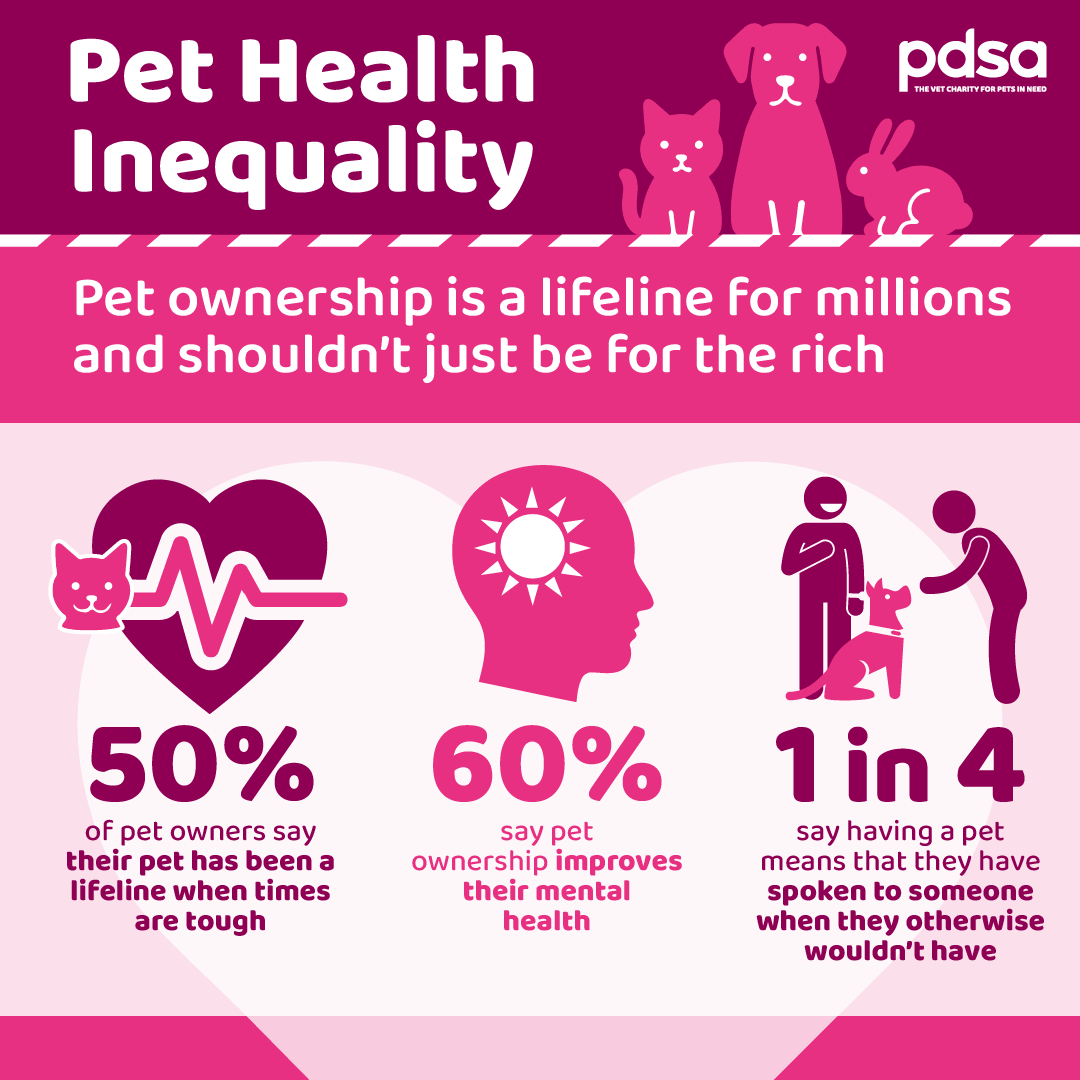
Tracey says: "Getting Rosie was literally life-changing for me. She has helped me manage my severe anxiety and improve my physical health, mental health, and happiness.
“It can be so stressful worrying about getting her the care she needs and what it might cost. A friend told me I would be able to be a PDSA client, and it's such a relief to know Rosie can get the care she needs in a way that's affordable for me.
“This crisis in pet health is so worrying for pets and people. If you're able to support this charity, please do. If you're an animal lover, you will know just how much their work means."
PDSA’s response
Our mission is to keep people and pets together by providing support for owners who cannot afford the cost of treatment. In the last year, PDSA treated over 422,000 pets and supported more than 339,000 owners across our network of over 40 Pet Hospitals.
In response to the worrying findings, we are determined to scale our efforts to meet demand where it’s needed most.
PDSA Director General, Jan McLoughlin, says: “Whilst this is very sad to hear, it’s not surprising. PDSA has been helping people and pets for more than 100 years, and we know our work is needed as much today as it ever was.
“The reality for many pet owners is that life looks very different compared to five years ago. Anyone’s circumstances can change because of illness, redundancy, or just the increased cost of living.
“We will continue to be there for the people and pets who need us most, and the report we’ve released today is a rally cry to the public to help us do so. No pet should suffer because their owner is experiencing financial hardship.”
Sign up for our free e-newsletter
Get the latest PDSA news, expert pet care tips, and inspiring stories straight to your inbox.
Make a life-saving donation today
Your donation helps provide vital vet care for pets whose owners need support. Thank you.
Get free online pet health advice
Our free Pet Health Hub is packed full of information to help answer questions about your pet’s health.
Join us on social media
Follow our social media channels for trusted pet advice and updates on our life‑saving work.
PDSA Animal Wellbeing (PAW) Report
Read the latest findings from our PAW Report on the health and well-being of the nation’s pets.

Footnotes
¹ S1 Survey methodology
All figures, unless otherwise stated, are from YouGov Plc. The total sample size was 4,440 adults. Fieldwork was undertaken between 27th February and 2nd March 2026. The survey was carried out online. The figures have been weighted and are representative of all UK adults (aged 18+).
When mentioning UK pet owners, this refers to all UK adults who have a pet, including a cat, dog, guinea pig, hamster, gerbil, domestic fowl, or mouse.
³ Percentage of all UK adults who have a pet cat, dog, guinea pig, gerbil, domestic fowl, or mouse =47%, which equates to 25,860,459 UK pet owners. 6% of UK pet owners, therefore = 1,551,628.
⁴ 11% of UK pet owners = 2,844,650.
Calculations for footnote 3 and 4 have been conducted by Shook using YouGov data and checked by YouGov.
² Other sources: From mid-2021, the cost of pet care began to skyrocket, far outpacing historical averages. After a massive peak in 2023, the rate of increase has been slowing down, but prices are still rising, just not as quickly as before. https://www.ons.gov.uk/economy/inflationandpriceindices/timeseries/czdi/mm23
Cost of living statistic: High cost of living: Impact on households