
Aural haematoma (swollen ear flap) in a dog
Overview
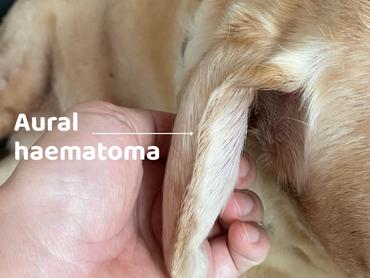
- An aural haematoma is a blood-filled swelling of the ear flap (pinna).
- Most aural haematomas are caused by head shaking or ear scratching due to an ear infection, ear mites or itchy skin.
- Fortunately, once the underlying cause is treated, most aural haematomas are fairly straightforward to treat.
- Always book an appointment with your vet if your dog develops an aural haematoma.
What causes an aural haematoma
(swollen ear flap)?
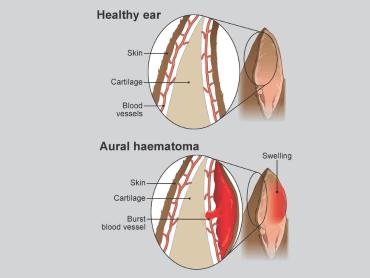
An aural haematoma is a blood-filled swelling of the ear flap (pinna). It happens when small blood vessels burst and blood collects under the skin, making the ear look puffy.
They usually happen when a dog keeps shaking their head or scratching their ear, often because of an ear infection, ear mites or itchy skin. Less often, they can happen after an injury or knock to the ear.
Symptoms
- A swollen, painful ear flap. It may droop, feel warm and look red. It can be a small soft swelling or a large swelling that covers the whole ear flap.
- Head shaking
- Ear scratching
- Head tilt
Diagnosis
Aural haematomas are usually very obvious and easy to diagnose. However, they are nearly always as a result of another problem so your dog will need a full examination to find out what caused it in the first place, including looking into your dog’s ear canal to check for any underlying issues.
Treatment
There are a few ways to treat an aural haematoma. Your vet will talk to you about what’s best for your dog.
Treatment may include one or more of the following:
- Steroids – to reduce swelling.
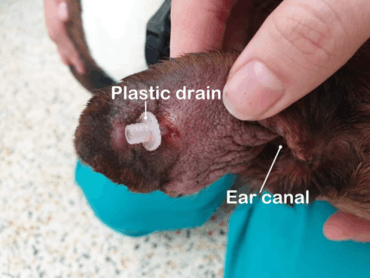
- Placing a drain – a small tube is placed in your dog’s ear for a few weeks to drain the blood and stop it filling up again. This can be continuously drained at home by taking the drain lid on and off.
- Draining the swelling using a needle – your vet may use a needle to remove the blood alongside giving a steroid injection into the ear flap (pinna).
- Surgery - your vet may advise surgery to remove the blood and help prevent it coming back.
- Pain relief – may be prescribed if your vet feels your dog needs it.
- Treatment for the underlying cause. This may include ear cleaner, antibiotics for an ear infection, treatment for ear mites, or medicine for itchy skin.

Keep your dogs ears clean, healthy and infection free.
- Free delivery on orders over £55
- All products vet-approved
- Accredited online retailer (AIRS)
- Rated 4.6/5 by our customers
Depending on your dog’s treatment, you may need to:
- Keep their ear clean and protected while it heals. The best way to do this is by using a buster collar (head cone), which should be cleaned regularly and left on until your dog’s ear has completely healed.
- Regularly clean your dog’s ear flap using cooled, boiled water – be very gentle so not to disturb healing.
- Give all prescribed medication (you may find our medication timetable helpful).
Outlook
The outlook is very good. Your dog should recover within a few weeks if their ear heals without complications. However, their exact recovery time will vary depending on what caused their aural haematoma to develop in the first place. There is a chance of the swelling returning and needing to repeat treatment.
Cost
Treatment for an aural haematoma can become expensive, so it’s important to speak openly with your vet about the cost of treatment, your finances, and what you think is right for your dog. There is sometimes more than one treatment option, so if one doesn’t work for you/your pet then your vet may be able to offer another.
Consider taking out dog insurance as soon as you bring your dog home, before any signs of illness start. This will give you peace of mind that you have some financial support if they ever become unwell.
Some small aural haematoma swellings can heal by themselves, however, there’s nearly always an underlying cause that needs treatment (such an ear infection).
It’s also important to be aware that aural haematomas can be very painful and left to heal by themselves often result in a scarred, thickened, crinkly earflap (just like a rugby player with ‘cauliflower ear’).
No, never try to drain an aural haematoma at home – you could cause further injury or infection.
Published: March 2026
Did you find this page useful?
Tell us more
Please note, our vets and nurses are unable to respond to questions via this form. If you are concerned about your pet’s health, please contact your vet directly.
Thank you for your feedback
Want to hear more about PDSA and get pet care tips from our vet experts?
Sign up to our e-newsletter
Written by vets and vet nurses. This advice is for UK pets only. Illustrations by Samantha Elmhurst.