
Saddle thrombus (aortic thromboembolism) in cats
Overview
- A saddle thrombus is a blood clot that blocks blood supply to the back legs.
- Symptoms appear suddenly and include severe pain or paralysis affecting one or both back legs.
- A saddle thrombus is an emergency – contact your vet immediately if your cat is showing symptoms. Sadly, many cats don’t survive a saddle thrombus.
- It’s important to start treatment as soon as possible to give your cat the best chance of recovery.
- A saddle thrombus is sometimes referred to as an ‘aortic thromboembolism’, which simply means a clot that travels along the main artery (the aorta) and gets lodged, blocking circulation to one or both back legs.
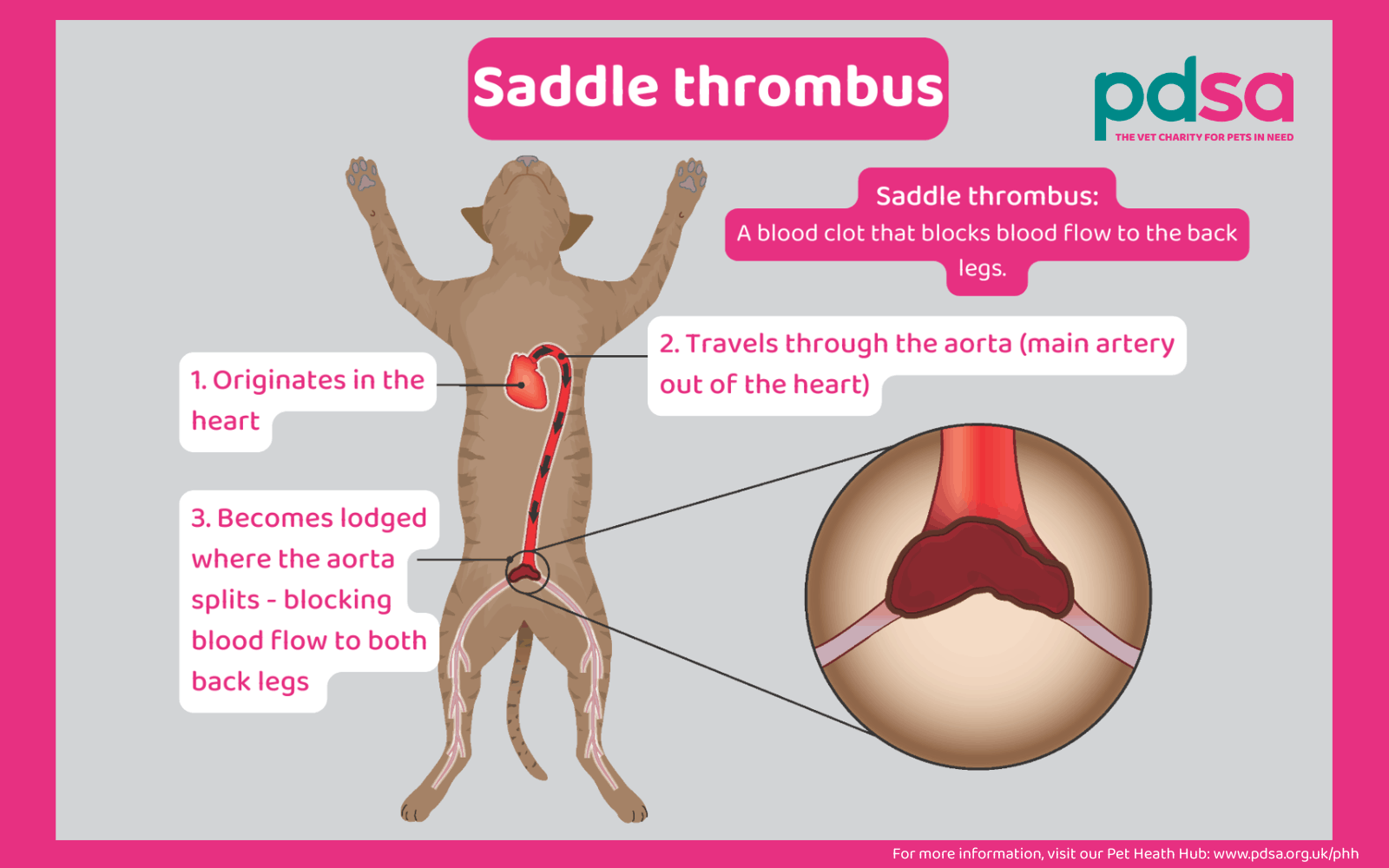
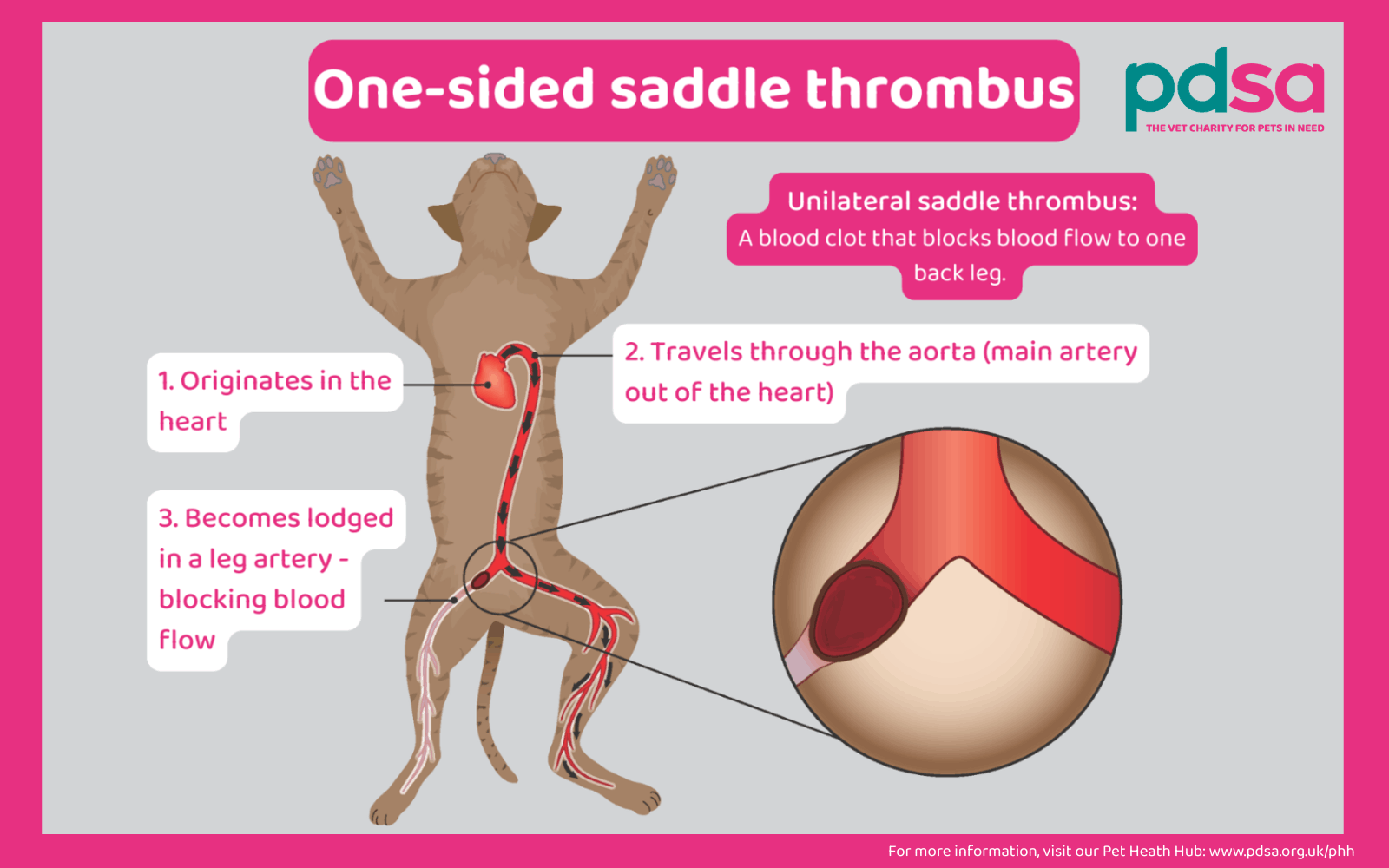
A saddle thrombus, or aortic thromboembolism, is an urgent medical condition that affects cats, causing severe pain and paralysis in the back legs. It happens when a blood clot, usually starting in the heart, travels through the aorta (main vessel leaving the heart) and becomes stuck in the blood vessels that supply the back legs.Most cases of saddle thrombus affect both back legs (see image above), but if the clot travels slightly further, it may affect just one leg (see image below).
Another possible complication some cats can have is other clots blocking blood flow to vital organs like the kidneys, lungs, or brain.
Causes of saddle thrombus in cats
Although there are a few possible causes of saddle thrombus in cats, heart disease is by far the most common:
- Heart disease: Most cats with saddle thrombus have an underlying heart problem. The most common type of heart disease to cause saddle thrombus is hypertrophic cardiomyopathy (HCM). Although it’s important to remember that not all cats with heart disease will get a saddle thrombus.
- Cancer: Certain types of cancer (especially lung cancer) can sometimes be a cause of saddle thrombus in cats, but this is rare. Cancer can make blood clots more likely.
- Hyperthyroidism: Hyperthyroidism is also linked with saddle thrombus in cats. This is because hyperthyroidism can affect how the heart works.
Symptoms
Symptoms of saddle thrombus tend to develop very suddenly and include:
- Severe pain – you may notice your cat crying, yowling, breathing quickly or open-mouth breathing
- Dragging one or both back legs, or being unable to stand (very occasionally, a thrombus can affect a front leg)
- Licking/chewing the affected leg(s)
- Stiff or firm muscles in the affected leg(s)
- Affected leg(s) may be cold to the touch
- Pale paw pads on the affected leg(s) – this can be tricky to notice if the pads are black
Saddle thrombus is a life-threatening emergency. Contact your vet immediately if your cat is showing any symptoms.
Treatment
Saddle thrombus is a very serious condition, and unfortunately, many cats don’t survive even with treatment. Because of this, your vet might talk to you about putting your cat to sleep to prevent suffering. If you decide to try treatment, your cat will need:
- Hospitalisation for intensive treatment and nursing care.
- Pain relief. Your vet will give your cat strong pain relief to help with the severe pain caused by a saddle thrombus.
- Medication to help stop more blood clots from forming. Unfortunately, even with blood thinners, many cats will still develop another blood clot at some point.
- Treating the underlying cause. Your vet will try to find out why your cat has a saddle thrombus and, if possible, treat the cause. For example, if your cat has heart disease, they might need medication for their heart.
Outlook
Sadly, the outlook for a cat with saddle thrombus is often not good. Your vet will discuss your cat’s individual outlook with you. Saddle thrombus is usually an extremely painful and distressing condition, so in some situations, euthanasia may be the kindest option. If treatment is started, it’s important to see some improvement within days.
It’s important to know that only about one in three cats survive the initial saddle thrombus and are able to go home with treatment. Of those cats, half develop another thrombus within six months. If your cat recovers, they will likely need lifelong treatment for conditions like heart disease or hyperthyroidism.
You may find the following helpful:
- Our video ‘How to: give your cat a tablet’
- Our medication planner.
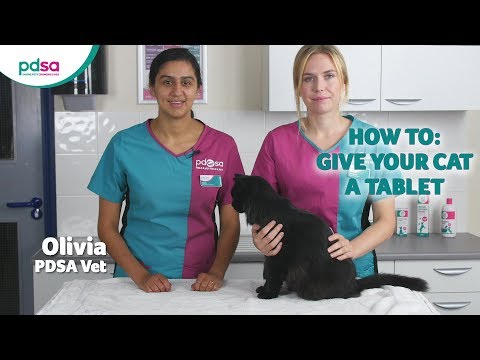 Video found at youtu.be/D-R383L64LI
Prevention
Cats are really good at hiding illnesses when they’re not feeling well, and sometimes a saddle thrombus appears without any prior symptoms. This means it can be hard to tell that your cat has anything wrong. That’s why it’s important to take your cat to the vet for regular check-ups so they can pick up on any issues as early as possible. A healthy weight and balanced diet help support your cat’s heart as well as their general health.
Cost
Treatment for a saddle thrombus can become very expensive due to the intensive treatment required, so it’s important to speak openly with your vet about the cost of treatment, your finances, and what you think is right for your cat.
When you welcome a new cat into your life, consider getting cat insurance straight away before any signs of illness start. This will give you peace of mind that you have some financial support if they ever get sick.
Published: Feb 2026
Did you find this page useful?
Tell us more
Please note, our vets and nurses are unable to respond to questions via this form. If you are concerned about your pet’s health, please contact your vet directly.
Thank you for your feedback
Want to hear more about PDSA and get pet care tips from our vet experts?
Sign up to our e-newsletter
Before you go!
Why not sign up for our newsletter to receive regular pet health advice from our vets?

Written by vets and vet nurses. This advice is for UK pets only. Illustrations by Samantha Elmhurst.