
Skin allergies in dogs
Overview
- A skin allergy is an oversensitivity (e.g. a strong reaction) to items such as pollen, grass, house dust mites and/or certain foods.
- Skin allergies are one of the most common causes of itchy skin in dogs.
- Symptoms tend to include itchiness, redness, hair loss, and repeat skin/ear infections.
- Skin allergy treatment is different for each dog, but often involves avoiding triggers, strict flea control, a special diet, and medication to stop the itch.
- Immunotherapy (desensitisation) can be used in some cases but isn’t always successful.
- Contact your vet for an appointment if your dog has symptoms of a skin allergy.
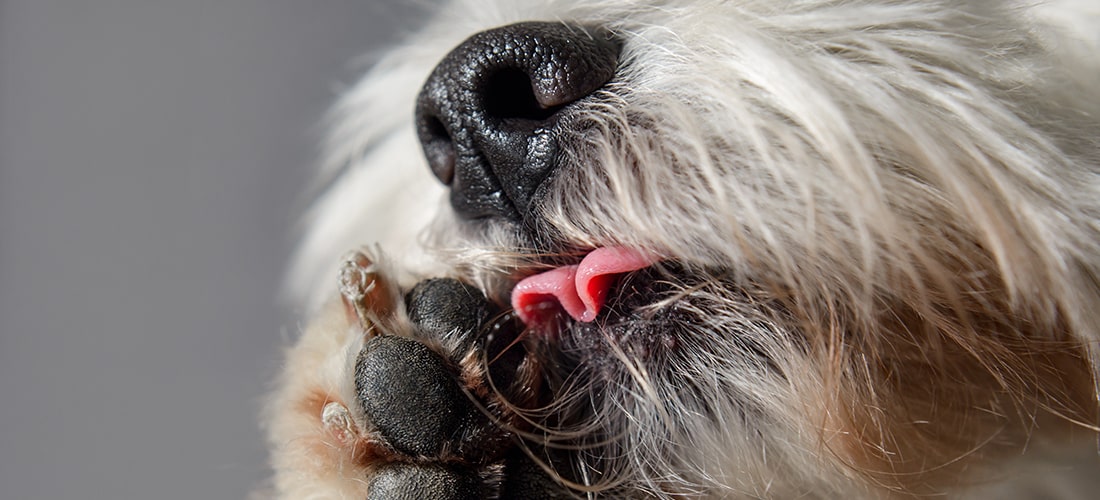
Skin allergies in dogs
Skin allergies (also known as allergic skin disease/atopic dermatitis) are one of the most common causes of itchy skin in dogs. If your dog has a skin allergy, this means that they are sensitive to something (or multiple things) that they come into regular contact with, for example:
- House dust mites
- Pollens, grass, trees, and moulds
- Fleas
- Food
Most dogs with allergic skin disease are allergic to more than one thing.
Symptoms
Skin allergies can develop in any dog, at any age, but are particularly common in certain breeds such as the West Highland White Terrier, Bichon Frise and Shar Pei. Symptoms usually include:
- Infections (skin and ear infections)
- Overgrooming and saliva stained skin
- Dark, thickened skin
Diagnosis (and allergy testing)
It may be tricky to find out exactly what your dog is allergic to, especially as it’s likely to be more than one thing. To begin with, your vet will try to rule out certain allergies that can be more easily controlled, such as fleabite and food allergies.
For example, to rule out parasites (such as fleas and mites), your vet will prescribe a prescription parasite treatment for your dog (you will also need to treat any other pets and your home), and to rule out a food allergy they may suggest a diet trial/elimination diet, which usually needs to happen over a six-to-twelve-week period.
It’s possible to check for other allergies using blood and skin tests, but unfortunately, this type of testing isn’t 100% reliable. The good news is that it’s not always necessary to know exact triggers because most skin allergies are treated in a similar fashion.
Treatment
No one size fits all, and every dog with a skin allergy needs a slightly different treatment plan. However, it’s likely that your vet will suggest some or all of the following:
Avoiding your dog’s triggers
If you know what your dog is allergic to, try to keep them away from it as much as you can. Even if you’re not sure what’s causing the problem, there are still things you can do to help reduce flare-ups:
- Treat your dog, other pets, and your home regularly for fleas.
- Avoid walking them in long grass (or rinse them off well afterwards).
- Avoid using sprays, aerosols, perfumes, and air fresheners at home.
- Vacuum and dust regularly.
- Feed your dog a food made for sensitive skin, if your vet recommends it.
Anti-itch medication
Some medicines can help reduce itching. These can come as tablets or injections. Your vet will talk to you about which treatment is best for your dog. This will depend on their symptoms, how long they need to be treated for, and your budget.
Supplements and shampoos
Most dogs with skin allergies benefit from:
- A skin supplement containing essential fatty acids, such as omega 3 and 6.
- A shampoo to help protect and soothe the skin – speak to your vet team about the best one for your dog.
It’s important to be aware that these treatments are often useful when used alongside other treatments (and can reduce the amount of other medications that are needed) but are unlikely to control the problem on their own.
Immunotherapy
If your dog has been allergy tested, it may be possible to desensitise them to their triggers with immunotherapy. Immunotherapy involves injecting your dog with a tiny amount of what they are allergic to, to get their body used to it. The injections work slowly over time and usually need to be given for a few years (sometimes for life). Unfortunately, immunotherapy doesn’t work for every dog, and in many cases, medication is still needed to reduce symptoms. It’s also not possible to use immunotherapy for all types of allergies.
When to contact your vet
It’s important to have your dog seen by your vet if you think they might have a skin allergy. Skin problems often get worse over time and left untreated can have a serious effect on quality of life. Always tell your vet if your dog’s skin allergy is getting worse, or their medication doesn’t seem to be working.
You know your dog best, always contact your vet if you’re concerned.
Cost
Treatment for skin allergies can become very expensive, so it’s important to speak openly with your vet about the cost of treatment, your finances, and what you think is right for your dog. There is sometimes more than one treatment option, so if one doesn’t work for you/your dog then your vet may be able to offer another.
Consider taking out dog insurance as soon as you bring your dog home, before any signs of illness start. This will give you peace of mind that you have some financial support if they ever become unwell.
Published: June 2026
Did you find this page useful?
Tell us more
Please note, our vets and nurses are unable to respond to questions via this form. If you are concerned about your pet’s health, please contact your vet directly.
Thank you for your feedback
Want to hear more about PDSA and get pet care tips from our vet experts?
Sign up to our e-newsletter
Before you go!
Why not sign up for our newsletter to receive regular pet health advice from our vets?

Written by vets and vet nurses. This advice is for UK pets only. Illustrations by Samantha Elmhurst.