
Getting a pet
How to choose the right pet for you
The most common places for people to get their pets have remained broadly similar in 2026. Dogs were most likely to come from breeders (33%), while UK rescue or rehoming centres remained the most common source for cats (32%). For rabbits, a UK rescue or rehoming centre became the most popular choice (24%), replacing pet shops or garden centres which fell from 26% in 2025 to 23% in 2026.
More than half of dog owners (56%) said they acquired their dog from a breeder or private seller. However, there has been a small, but significant, increase in the proportion of owners who acquired their dog from a UK rescue or rehoming centre for UK pets, from 11% in 2025 to 13% in 2026. This was the highest percentage reported since 2021, when it was 17%. Similarly, the proportion of cat owners who acquired their cat from UK rescue or rehoming centre for UK pets increased significantly from 29% in 2025 to 32% in 2026. Other sources included private sellers (14%) and rehoming from family members, friends or neighbours (10%).
The proportion of owners reporting that they acquired their pet from abroad remained relatively stable, at 8% for dogs, 4% for cats and 2% for rabbits.
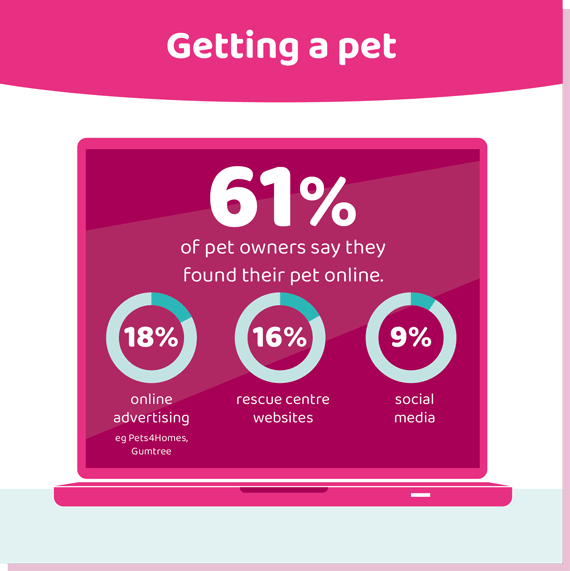
The internet continues to play an important role in how people find a pet, with 61% of pet owners saying they found their pet online. This included online advertising sites such as Gumtree and Pets4Homes (18%), rescue centre websites (16%) and social media (9%).
While finding a pet online can make it easier for owners to research and find a pet that is suitable for them, it can also carry risks. Owners should take care when responding to online adverts and check that the seller or organisation is genuine and prioritises the welfare of their animals. Irresponsible or illegal breeding and rehoming activity can be difficult to identify from photos, videos and descriptions alone, potentially leading to devastating consequences for the pets and their owners. Taking the time to research where to find a pet and understand its needs can help prospective owners make informed decisions about the right pet for them.
Am I ready for a pet? What to consider first
The most common reason owners gave for getting a pet was companionship for themselves or a person in their household (42%). This reflects how important our pets are as a source of support, friendship and company in many people’s lives. Other common reasons included feeling that the pet needed rescuing (22%), they had recently lost their pet (21%) and that they felt their pet would give them love and affection (21%). All these reasons reflect the strong emotional bonds between pets and people.
However, some findings raise concerns about whether owners have fully considered the long-term commitment involved in pet ownership. One in seven pet owners (14%) said they got their pet because their children wanted one, rising significantly to 33% of rabbit owners.
While pet ownership can be a positive experience for children, there should always be careful consideration of the pet’s welfare and needs when choosing a pet and bringing it home. An adult is always legally responsible for providing for all the pet’s welfare needs throughout their lifetime and should actively supervise their child when caring for or interacting with the pet. Children’s interests, routines and abilities can also change as they grow, so adults should be prepared to take full responsibility for the pet’s care, as needed.
Another concern is that a further 2% of dog and cat owners said their pet was an impulse purchase, rising to 6% in rabbit owners. This could equate to approximately 220,000 dogs, 210,000 cats and 42,000 rabbits. We would never recommend getting a pet as an impulse purchase. Pets are sentient beings, with their own thoughts, feelings and needs, and prospective owners should consider the long-term emotional, financial and time commitments involved before bringing a pet into their home. Getting a pet on impulse can be damaging and heartbreaking for the pets and people involved. Taking time to research and prepare for pet ownership can help owners make an informed decision and ensure they are able to meet their pet’s needs throughout their life.
Pet responsibilities: what every owner needs to know
Understanding a pet’s needs and the responsibilities involved in caring for them is an important part of preparing for pet ownership.
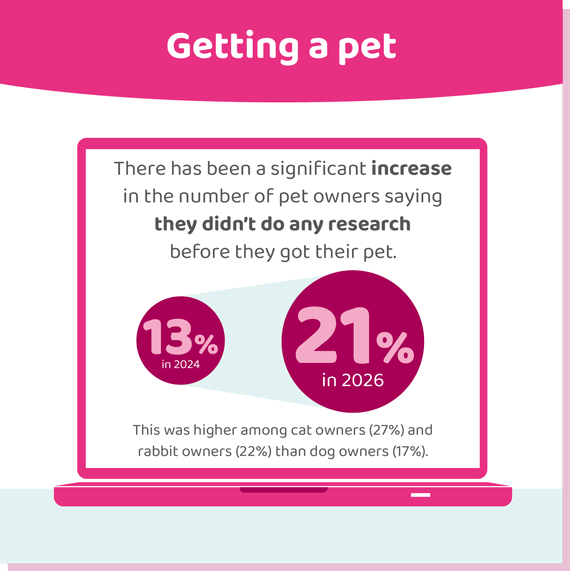
We asked owners what research they carried out before choosing their pet, and this year’s findings show some notable changes compared with previous years. Concerningly, there has been a significant increase in the number of pet owners saying they didn’t do any research before they got their pet, from 13% in 2024 to 21% in 2026. This means 1 in 5 pet owners are doing no research to decide if they should get a pet, what type of pet to get, and where to get their pet from. This was significantly higher among cat owners (27%) than dog owners (17%).
This change has been reflected across different sources of information. The proportion of pet owners who said they researched pets online has fallen significantly, from 33% in 2024 to 25% in 2026. There were also significant decreases in the proportion seeking advice from friends or family (16% in 2026, compared with 24% in 2024), breeders (8% in 2026, compared with 12% in 2024) and veterinary professionals (6% in 2026, compared with 9% in 2024).
There was a significant decrease in those who looked into the cost of owning a pet before getting one, falling from 24% in 2024 to 16% in 2026. Given the pressures on finances with the cost of living, this is an even more crucial consideration for pet owners than ever before. This is reflected by the fact 17% of pet owners said that better understanding of the cost of owning a pet was one of the three most important pet issues that need to be addressed.
This year, we also asked owners about the activities they carried out before bringing their pets home. Among dog owners, 47% of owners had seen their dog with their mother before they brought them home and 39% had visited their dog on more than one occasion. Among cat owners, 24% had seen their cat with their mother and 24% had visited them on more than one occasion.
These activities can help prospective owners assess how a pet has been cared for and whether the person currently responsible for them is meeting the needs of the animals in their care. Around 1 in 4 pet owners also reported being asked questions about their household or situation before bringing their pet home (29% of dog owners, 25% of cat owners and 24% of rabbit owners). Asking prospective owners questions can help those selling or rehoming pets assess whether they are prepared to meet the pet’s needs and the responsibilities of ownership of the animal throughout its life. At PDSA, we would hope to see these numbers increase to ensure that anyone who is selling or rehoming pets is considering their future, as part of wider reforms to the legislation and guidance around pet acquisition.
Key Takeaways
Dogs were most likely to be acquired from breeders, while rescue and rehoming centres were the most common source for cats and rabbits. Most pet owners are finding their pet online. People are most commonly getting pets for companionship, showcasing the key importance of human-animal bonds. There is a worrying increase in pet owners doing no research before choosing a new pet, and a decrease in those considering the cost of pet ownership. These findings highlight the importance of carefully considering the responsibilities, costs and welfare needs of a pet before making the decision to get a pet.