
PAW Report 2026
Pet populations
Getting a pet
Dogs
Cats
Rabbits
Preventive
Responsible dog ownership
Conclusion
Responsible dog ownership
Being a responsible dog owner covers all areas of a dog’s life, including understanding your dog’s behaviour and safety, taking responsibility for your dog’s behaviour and care, and following relevant legislation. These are important in supporting good welfare and positive relationships between dogs and their owners, while helping to promote safer interactions and reduce the risk of incidents involving dogs. Responsible dog ownership also involves understanding how to meet a dog’s needs and support their health, wellbeing and behaviour throughout their life.
Reward-Based Training: A Foundation for Good Welfare
While behaviour is caused by a wide range of factors, training dogs in the right way can have a positive impact on them and help them know how they’re expected to behave. The majority of pet owners (77%) agreed that aggressive dog behaviour is a result of inappropriate or inadequate training by an owner. Around 1 in 3 pet owners (35%) also identified behavioural problems, such as aggression or destructive behaviour, as one of the three most important issues that needs to be addressed. However, concerningly, 1 in 8 dog owners (12%) said they had not trained their dog in any way.
Using appropriate reward-based training methods can help dogs learn to respond to cues, cope with everyday situations and communicate comfortably with their owners. Effective, reward-based training can support good welfare and help dogs stay safe when they’re out and about. Dogs that can reliably respond to cues, cope with everyday situations and communicate comfortably with their owners may be less likely to find themselves in situations that lead to conflict, fear or defensive aggression.
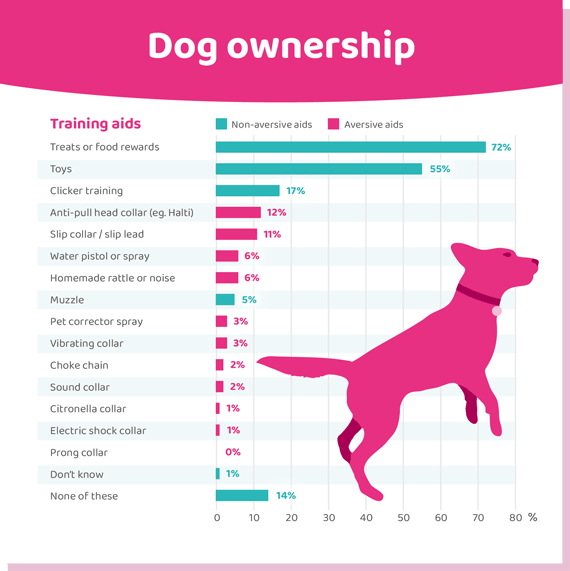
When asked about the methods they use to train their dogs, 72% of dog owners said they had used treats or food rewards, while 55% had used toys and 17% had used clicker training. These findings suggest that many dog owners are using training methods that incorporate positive reinforcement. However, the findings also highlight that there is an opportunity to encourage more owners to engage in appropriate, positive reward-based training.
Aversive dog training: understanding the risks to welfare
Aversive training methods use something unpleasant to discourage unwanted behaviour. These methods can negatively impact dog welfare and may increase fear and aggression, with potential implications for both animal welfare and public safety.
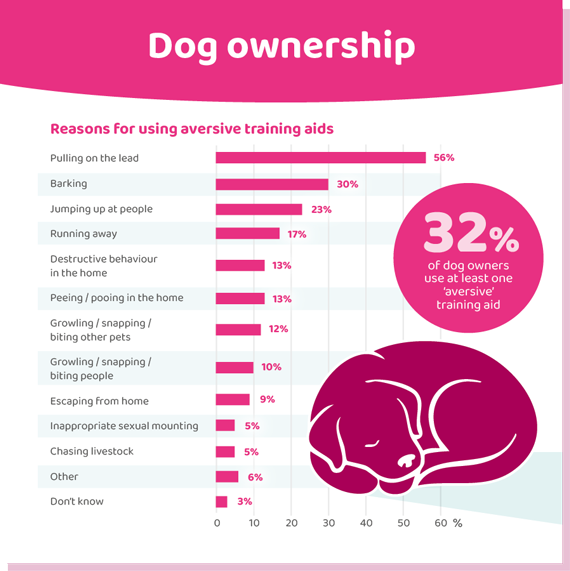
Despite this, almost 1 in 3 dog owners (32%) said they have used at least one aversive training method. This included citronella collars, electric shock collar (also called e-collars), vibrating collars, prong collars, coke chains, pet corrector sprays, water pistols or sprays, homemade rattle or noise device, sounds collars, slip leads or collars and anti-pull head collars (e.g. Halti). The reasons dog owners gave for using aversive training methods included preventing their dog pulling on the lead (56%), barking (30%), jumping up at people (23%) and running away (17%).
PDSA recommend using positive, reward-based training methods for dogs, which are known to be effective as well as being good for your dog’s health and mental wellbeing. This is an important part of responsible dog ownership and can help support positive relationships between dogs and their owners.
Public perceptions of dogs and safety
Although the UK is a nation of animal lovers, around 1 in 5 pet owners (18%) are concerned about the danger dogs pose to the UK public. In addition, 86% of pet owners thought that some breeds are more aggressive when, in reality, breed is only a small factor in a dog's behaviour. While public safety from dangerous dogs, including reducing aggressive behaviour and bites, are an important issue for our society, there needs to be a major shift in understanding the factors that can influence a dog’s behaviour if we want to change things for the better.
Dogs are often blamed for aggressive behaviours, when there are many human factors that lead to a dog feeling they must bite. Dog behaviour is influenced by their early experiences, training, socialisation, environment and how they are kept. Instead of branding dogs, or certain breeds, as frightening or aggressive, we should be equipping dog owners to understand their dogs and help our pets to be safe around people and animals. We also need to help everyone know how to safely interact with pets they meet when they’re out in the world. PDSA are urging the Government to undertake a much-needed extensive reform of the Dangerous Dogs Act (1991) and adopt an evidence-based approach to dog control legislation, focusing on an understanding of dog behaviour, effective training and wider factors that contribute to dog-related incidents. Public perceptions of dogs and safety
Staying safe around dogs: how much does the public know?
Understanding how dogs communicate is essential to keeping them happy, and to staying safe around them. The Canine Ladder of Communication (or Aggression) is an essential tool to understand dog behaviour and emotions. While many pet owners believe they know how to stay safe around dogs, awareness of the Canine Ladder of Communication remains low. Although 69% of dog owners, 59% of cat owners and 64% of rabbit owners said they know how to stay safe around dogs because of personal experience, only 6% of dog owners, 4% of cat owners and 4% of rabbit owners said they had learnt about the ladder. This suggests that personal experience alone may not provide people with the knowledge they need to recognise and respond appropriately to dogs’ body language. Understanding dog behaviour and body language is an important part of responsible dog ownership and can help support safer interactions between dogs and people.
Key Takeaways
Dogs are an important part of millions of UK families, but responsible ownership is essential to supporting their welfare and helping them live safely and happily alongside people and other animals. The findings suggest that while many owners are embracing positive reward-based training methods, concerning numbers continue to use aversive techniques. There is an opportunity to support owners with greater awareness of appropriate training methods, dog behaviour and responsible ownership. Creating safer communities for both people and dogs requires a focus on prevention and education, alongside evidence-based approaches to dog control. These approaches should consider the range of factors that can influence dog behaviour, rather than focusing on breed alone.