
Concluding thoughts from our Chief Veterinary Advisor, Steve Howard
The PDSA Animal Wellbeing (PAW) Report has provided a unique insight into how people care for their pets for more than 15 years. During this time, we have seen the important role pets play in our lives, with owners continuing to tell us about the positive impact their pets have on their happiness, health and wellbeing.
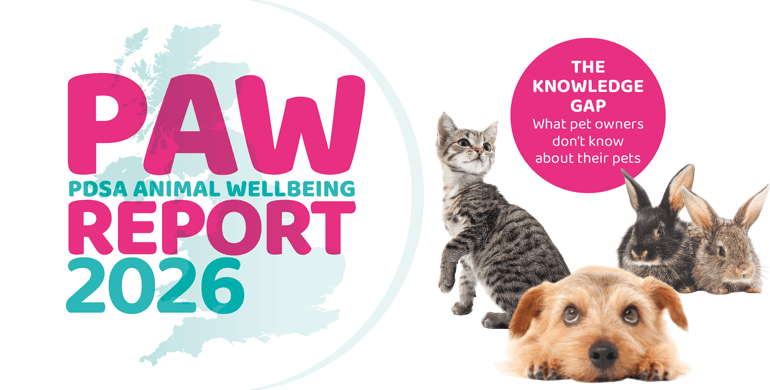
However, wanting the best for a pet is not always the same as knowing what they need. This year’s PAW Report explores how the knowledge gap in understanding our pets can influence the choices owners make, sometimes with negative consequences for their pet’s health and welfare. We have looked at issues that are relevant for today’s pets, whether they have been featured in headlines or have a hidden impact on pet welfare that needs to be surfaced.
This is particularly clear in our findings around dogs. While many owners recognise the importance of responsible pet ownership, our findings highlight gaps in understanding around dog training, canine communication, and safe interactions. The use of aversive training methods and the low awareness of canine body language are concerning, particularly when better understanding could help prevent unwanted behaviour and keep both people and animals safe. The belief that a dog’s breed predicts its propensity to be aggressive needs to be addressed and a better understanding that in all dogs, the degree of socialisation, training and positive reinforcement are far more important.
The choices made before choosing a pet and bringing them home are equally important. Taking the time to research an animal’s needs, understand the commitment involved and consider the financial and practical responsibilities of pet ownership can help people make informed decisions. Our findings suggest that a worryingly high proportion of owners are making these decisions without enough preparation. More owner research could also help address the issues that arise from choosing pets with the most extreme conformations, which has profound impacts upon pet welfare and their owners. It can also prevent the heartbreaking decisions caused when a pet isn’t suited to their owners’ circumstances or lifestyle.
The findings on preventive healthcare also remind us that good welfare is not simply about treating illness when it occurs. Neutering, vaccination, microchipping and responsible parasite control can all help owners protect their pets, while regular veterinary care provides opportunities to identify problems early. Pet Insurance can also help owners manage the financial costs of unexpected veterinary treatment.
Gaps in research and understanding are driving some of the key issues under discussion today, but this year’s PAW Report shines a spotlight on them and will allow us to equip owners, as well as wider society, to better understand how to do their best for the pets we know our nation loves.
One of the greatest strengths of the PAW Report is that we can look at these issues over time. More than 15 years of consistent pet research and data allows us to see where progress is being made and where concerns remain. What we have presented in this Report is only a small part of the data collected. Over the coming year, we will share further findings and explore additional themes, continuing to build a picture of the key issues impacting pet wellbeing in the UK.
The knowledge gap cannot be addressed by owners alone. Veterinary professionals, animal welfare organisations, government, educators and the wider pet industry all have a role to play in making reliable and consistent information easier to find and understand, and in supporting owners to put that knowledge into practice.
Every pet deserves the opportunity to live a healthy, happy life and have their needs understood and met. By improving what people know about pets, and helping them turn that knowledge into action, we can make a real difference to the lives of the animals we care for. Supporting better understanding of pet wellbeing and the responsibilities of pet ownership can help more pets live healthy, happy lives.
The PAW Report remains a benchmark for understanding how UK owners provide for the needs of their pets. We hope the evidence in this year’s Report will inform policy and practice, stimulate discussion and progress among everyone concerned with pet welfare, and, ultimately, help close the knowledge gaps for the benefit of pets and the people who care for them.

Steve Howard, PDSA Chief Veterinary Advisor