
Bringing your baby home for the first time is a huge moment for the whole family, the nerves and excitement can be felt by everyone – including our pets.
Whether you have a dog, a cat or a small pet, meeting a newborn can be an exciting and unfamiliar experience. By planning and taking things at a slow pace you can help make those first moments calmer and more positive.
It is important to remember that every pet is different, so it's important to consider your pets temperament and history when planning how to introduce your baby to them.
2. Make the first introduction calm and positive
The first introduction between your baby and your pet is something you can plan before your baby even comes home. Think about your pet's temperament and how they normally respond to new people and situations.
Before you introduce your baby, think about:
- Your pet's temperament
- Where you’ll meet
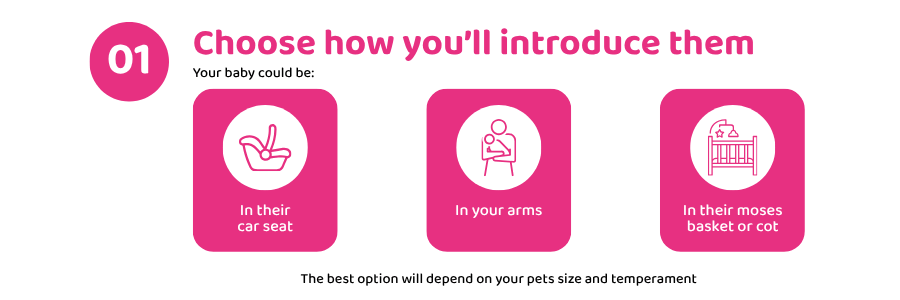
- How you’ll introduce them
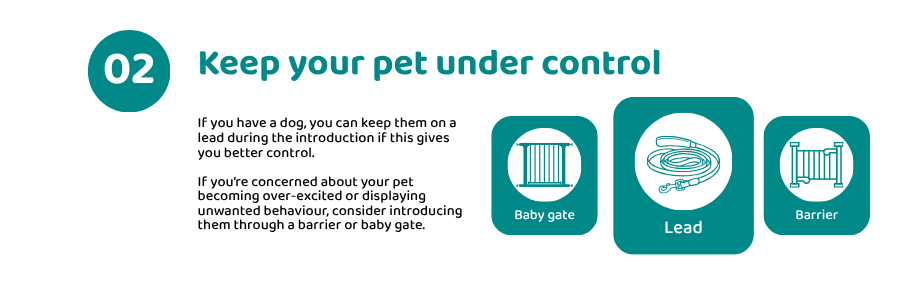
- How you’ll manage your pet
- Who can help
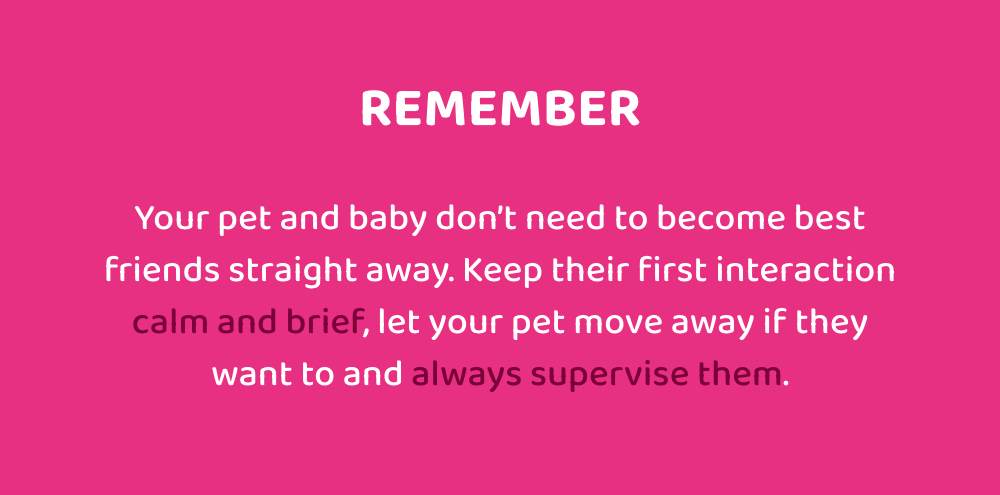
Remember
When you are ready to do the first introduction make sure you give your pet a chance to settle. Our pet health team recommends that when you arrive home, greet your pet yourself first – without the baby. Give them chance to say hello and calm down before introducing them to their new family member. Ensuring dogs are exercised before the introduction can help reduce restless and excitable energy.
2. Make the first introduction calm and positive
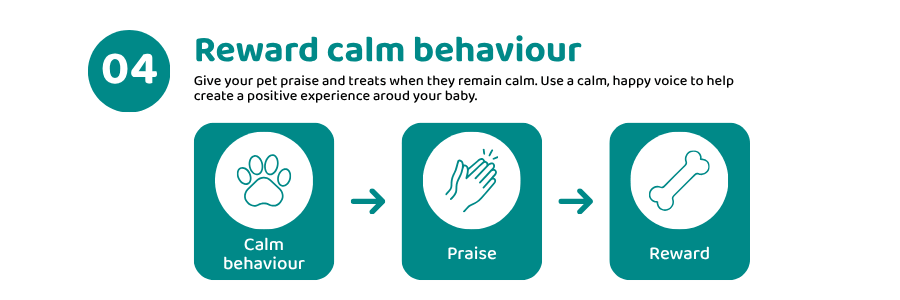
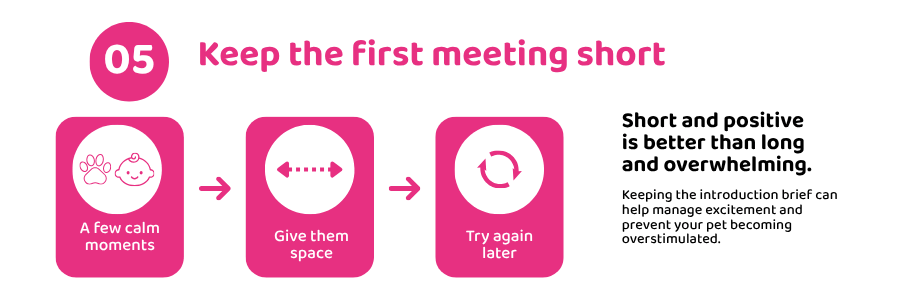
When you're ready to introduce your baby to your pet, aim to keep the first meeting calm, positive and brief. Every pet is different, so let your pet's behaviour guide you and never force an interaction.
3. Watch your pets body language
Your pet's body language can tell you a lot about how they're feeling. Keep watching them throughout the interaction and be ready to give them space if they seem uncomfortable.
Every pet is different, so it's important to consider your pets usual behaviour as well as how they're responding to your baby. If your pet shows signs of fear, anxiety or aggression, stop the introduction immediately.
You can learn more about your pet's body language on our Pet Health Hub.
Don't tell your pet off
If your pet becomes anxious or shows unwanted behaviour, it is important not to tell them off. This can make their feelings worse and may make the situation more confusing for them.
Instead, stop the interaction and give them some space to calm down before trying again later.
If your pet's behaviour is dangerous or difficult to manage, even after attempts to introduce them to your baby, speak to a certified behaviourist for advice.
4. Never leave your baby and pet alone together
Even if the first introduction goes well, it's important to remember that all interactions between your baby and pet should be supervised by a responsible adult. From 1 November 2026, legislation comes into force that prevents any child under the age of 12 from being left unsupervised with a dog on the banned breeds list. Despite this law focusing on banned breeds, any dog and other pets can pose a risk to a child, which is why we recommend always supervising children around any type of pet.
Your pet may become more comfortable around your baby over time, but this doesn't mean they should be left alone together.
Keep these rules in mind
Never:
- Let your pet near your baby’s face or head
- Force your pet to interact with your baby
- Place your baby on your pet
- Place your baby next to or on the floor with your pet
- Leave your baby and pet together unsupervised
Always:
- Give your pet the option to move away
- Make sure your pet has a safe and quiet place to rest
- Have a responsible adult supervise interactions
5. Introducing more than one pet
If you have more than one pet, introduce them to your baby one at a time.
This allows you to focus on each pet individually and pay attention to how they're responding to your baby.
Give each pet their own calm introduction before continuing to supervise them around your baby.
6. What about introducing your baby's scent first?
You may have heard that bringing home a blanket with your baby's scent on it before they meet can help your pet prepare for their arrival.
Although there is no harm in doing this, one exposure is unlikely to make a huge difference.
For dogs, repeated exposure to your baby's scent alongside praise and treats is needed to have a positive impact.
Remember
If you choose to introduce your baby's scent beforehand, just remember that this is just one part of preparing your pet and won't replace a calm and gradual introduction.
7. After the first introduction
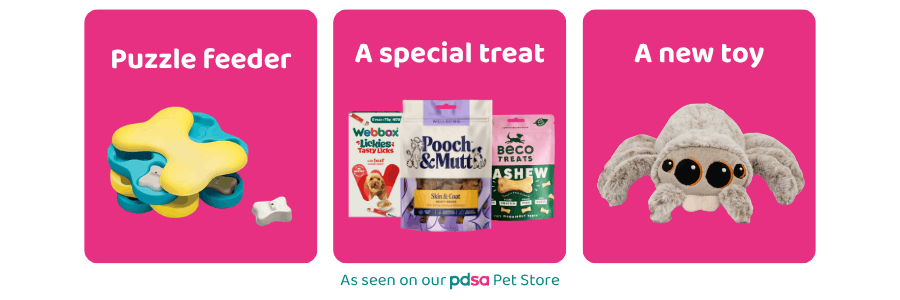
Once your baby and pet have met for the first time, it is important to give your pet the opportunity to do something positive.
For dogs this could be:
- A puzzle feeder
- A special treat
- A new toy
You should also try to keep your pet's routine as consistent as possible.
However, if you do expect your pet's routine to change after your baby arrives, introduce those changes before your baby comes home where possible. This means that your baby isn't the only new change your pet has to get used to.
Common mistakes to avoid
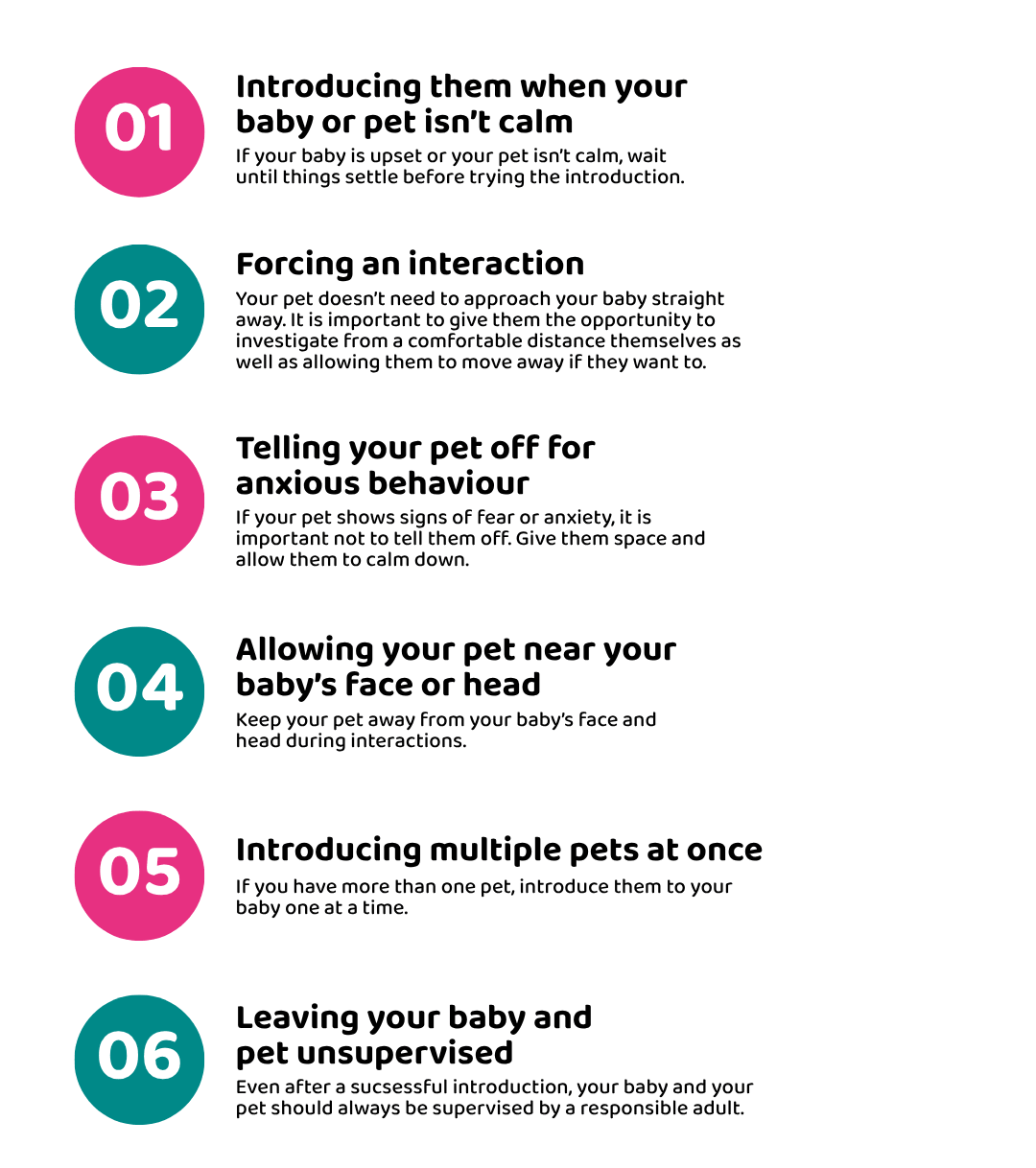
As much as it may feel like it, introducing your pet doesn't need to be complicated. But there are a few things that are important to avoid.
FAQs
Should I let my pet sniff my baby?
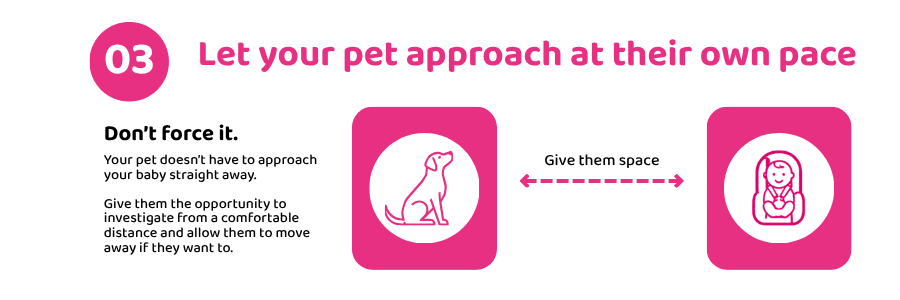
Yes, you can allow your pet to sniff your baby if they choose to approach but it is important to keep them away from your baby's face and head. Let them investigate at their own pace rather than bringing your baby closer to them or encouraging them to interact.
Keep the first interaction brief and calmly supervise your pet throughout.
What if my pet seems scared of my baby?
If your pet shows signs of fear or anxiety, stop the introduction and give them space.
Don't tell them off for showing these behaviours, as this can make their feelings worse.
If you're concerned about your pet's behaviour or are struggling to manage it safely, speak to a qualified behaviourist for advice.
How long does it take for a pet to adjust to a new baby?
Every pet is different, so there's no set amount of time it will take for them to adjust.
Give your pet time to get used to the changes and continue to provide positive experiences, a safe place to rest and attention when they want it.
You don't need to rush the process. Keep interactions calm and brief and allow your pet to move away when they want to.
Can my pet sleep in the same room as my baby?
It’s safest to keep pets out of the same room as your sleeping baby – there will be periods of the night when you are also asleep and therefore unable to properly supervise. Some pets may be able to access your babies sleep space by jumping from your bed or even jump up at the moses basket/cot which could be dangerous.
If you wish for your pet to sleep in the same room, keep them securely separated from your baby using a barrier or even a crate. Having their own comfortable sleeping space can help them adjust to changes in the house and establishes a safe routine.
Remember, any changes to routine – like where your pet sleeps – should be made before baby arrives, to minimise stress and anxiety.