
New sights, sounds and smells, along with other changes to their usual routine, can take some getting used to for cats, dogs and small pets.
Throughout November, we’ll be sharing advice to help you prepare your pet for your baby’s arrival, introduce them safely and support them as your family grows. In this blog, we’ll explore five common mistakes to avoid when preparing your pet for a new baby.
1. Leaving everything till last minute
It can be tempting to wait until your baby's arrival is getting closer before making changes, but allowing plenty of time for your pets to adjust can make things much easier for them.
Changes around your home, such as moving furniture, introducing new baby equipment or a change in your pet's routine, can be stressful. Try to make these changes gradually and early, rather than introducing lots of new things at once.
For example, if you are moving your pet's bed or introducing new furniture, such as cots, next-to-me cribs etc, give them plenty of time to get used to it. You can praise and reward to help your pet associate new things with positive experiences.
Shauna Walsh, one of our PDSA veterinary nurses advises that if you have a dog, you might also want to practice walking them alongside a pushchair or pram before your baby arrives. This gives you time to work on good lead and walking manners, so that walks are easier and still enjoyable once your baby is here.
If you're introducing a crate as a safe space for your dog, it is also important to make sure they're comfortable using it well before your baby arrives. Find out more about crate training your dog.
Plan for when you go into labour/hospital
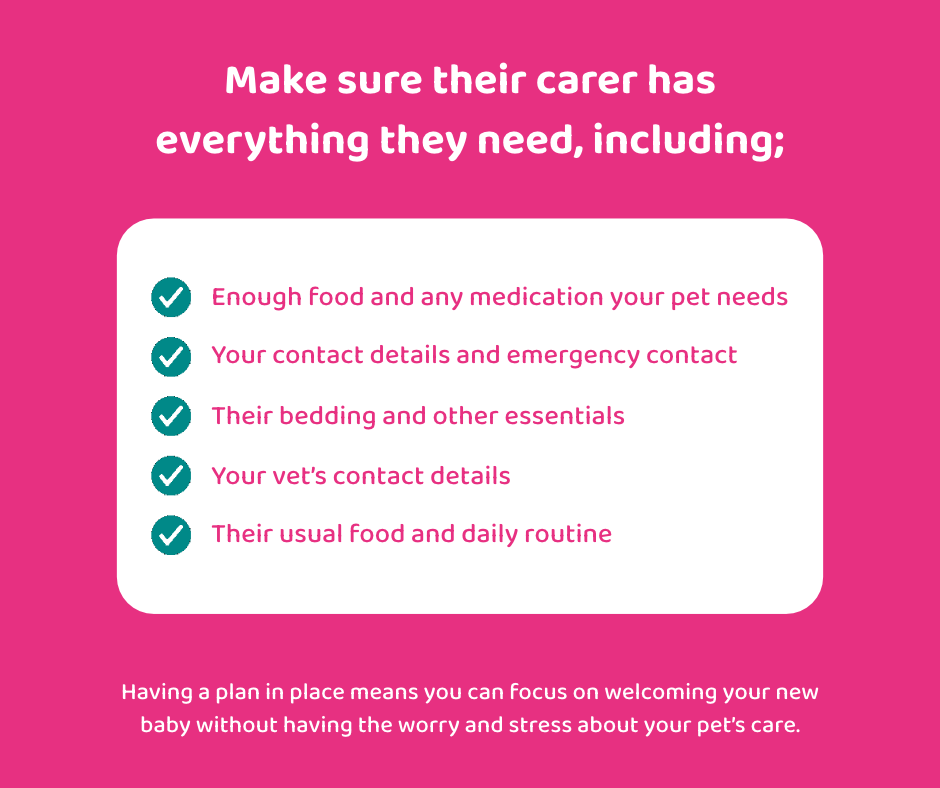
Don't forget about your pet when planning what will happen when you go into labour or into hospital.
Think about who will look after your pet when you are in labour as well as if you need to stay in hospital. Consider asking a trusted friend or family member, or your pet’s usual boarding kennels or cattery if you have a planned admission to hospital.
2. Waiting until after your baby arrives to set new boundaries
Your baby's arrival may mean that certain things around the home need to change.
Perhaps your pet has always been allowed on the sofa, but you don't want them to when you're holding your baby. Or maybe you don't want your pet going into your child's nursery.
Whatever boundaries you want to introduce, try to put them in place before your baby arrives.
This gives your pet time to learn what is expected from them without having to go through lots of other changes at the same time.
By introducing these new boundaries early, you can also help prevent your pet from associating these changes with the baby.
Think ahead: Are there any rules you'd like to introduce once your baby arrives? Start working on them now, so they're already familiar to your pet.
3. Assuming your pet will automatically know how to behave around a baby
Your pet might never have encountered a baby before, so we can't expect them to automatically know how to behave around them.
Babies have unfamiliar smells, sounds and movements. These can be exciting for some pets and stressful and confusing for others.
What we recommend is gradually introducing your pets to some of these new experiences before your baby comes.
For example;
- Playing recordings of baby sounds at a low volume while rewarding your pet for remaining calm.
- Letting your pet investigate some of the items they’ll encounter once your baby arrives, such as a pram, cot or other baby equipment
- It might feel a bit strange, but consider holding a doll or a bundle of blankets in your arms as you will when baby comes home
The aim isn't to make your pet interact with everything. It's to help them become familiar with these new sounds, new sights and smells in a positive and calm manner.
4. Not learning to recognise when your pet is uncomfortable
One of the most useful things you can do before your baby arrives is learn how your pet communicates.
Pets can't verbally tell us what they are feeling (even though we wish they could), but their body language can give us important cues.
For dogs, signs that they may be uncomfortable can include:
- Turning their head or body away
- Trying to move away or hide
- Tucking their tail
- Holding their body stiffly or becoming very still
- Pinning their ears back
Read more about dog body language, cat body language and small animals body language.
It is also important to know that you must look at your pet's whole-body language and the situation they're in, rather than relying on one sign alone.
Understanding your pets can help you spot when they need a break before they become overwhelmed, helping to keep everyone safe and happy.
5. Not preparing your pet for getting less attention
This can be one of the hardest changes for both you and your pet.
If your pet has always been a big part of your day, they're likely to be used to having lots of your attention. Once your baby arrives, your time and attention will naturally change.
And if you are used to your pet being your priority, it is completely normal to feel guilty when this changes
Preparing your pet for this change before your baby arrives can help make the transition easier.
If your pet is used to having you around constantly, gradually introduce periods where they're happy spending time away from you. You could encourage them to settle in their bed while you're nearby or spend short periods in another room while they have something positive to keep them occupied.
Try to build this up gradually rather than suddenly reducing the amount of attention your pet receives when your baby arrives.
You could also ask friends and family for help once your baby is here. They may be able to take your dog for a walk, play with your pet or simply give them some attention while you settle into your new life.
If your dog finds being separated from you difficult, it is important to recognise the difference between simply getting used to spending time apart and experiencing separation anxiety. Find out more about separation anxiety in dogs.
Cats can also suffer with separation anxiety when routine changes and the amount of time you spend together changes. If you are concerned about your cat being left alone, PDSA has advice on how to prevent separation anxiety in cats.
A key thing to remember is that you don't have to do everything yourself.
Preparing your pet doesn't mean everything has to be perfect
Having a baby is a huge change, and it's normal for things to feel a little different while everyone adjusts.
Preparing your pet isn't about making sure everything goes perfectly, because that's not realistic. It is about giving them time to get used to changes, understanding when they're feeling uncomfortable and making sure they have somewhere safe a quiet to retreat to when they need some space.
With some preparation, patience and support, you can help your pet adjust to life with your new arrival.