
Watching your baby learn to crawl is an exciting milestone. Suddenly, they can explore more of the world around them, discover new things and move around with greater independence.
But this new freedom can take some getting used to for your pet, too. Your little one might crawl towards them, reach for them or change direction without warning. What can seem like harmless curiosity to a baby can feel unpredictable or confusing for any animal.
As your baby starts to become more mobile, a few changes around the home can help your pet feel comfortable with the change while keeping your little explorer safe.
These are a few things we recommend looking out for and considering when your little one becomes more mobile.
1. Don't assume your pet will always react the same way
Your pet might have been perfectly comfortable around your baby before they started crawling. But as your little one becomes more mobile, their behaviour and the way they interact will change.
Crawling babies can move suddenly, make unfamiliar noises as well as stare directly at animals. They may also follow your pet and reach out for them without understanding when they need some space.
This doesn't mean your pet won't enjoy being around your growing family. They just need a little extra time to get used to these new interactions.
Remember: A pet who is comfortable around a newborn may respond differently to a crawling baby. Keep paying attention to how they're behaving as your little one reaches new milestones.
2. Give your pet somewhere your baby can't follow
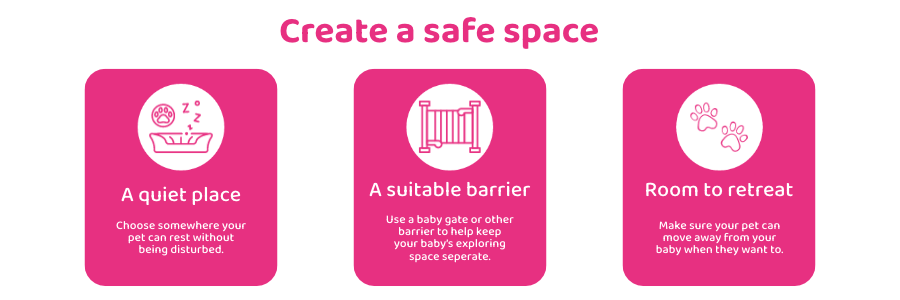
As your baby starts moving around and exploring, one of the most helpful things you can do for your pet is create a safe space where they can rest undisturbed.
This could be a quiet room, a comfortable bed behind a baby gate or a suitable crate if your dog is crate trained. A playpen or other barrier can also help you manage which areas your baby can access.
The important thing is that your pet can retreat to somewhere your baby can't follow them.
Try looking at your home from your baby's perspective. Are there places they can crawl into where your pet likes to sleep? Can they reach your pet's bed or corner them somewhere?
Making a few small changes now can help your pet keep the space they need as your baby becomes more adventurous.
3. Keep food, toys and beds out of reach
We all know that babies explore with their hands, and your pet's belongings can be particularly tempting to little hands.
However, pets may feel uncomfortable if your baby reaches for their food, interrupts them while they are eating or grabs their favourite toy.
Where possible, try to keep your pets' resources in an area your baby can't access.
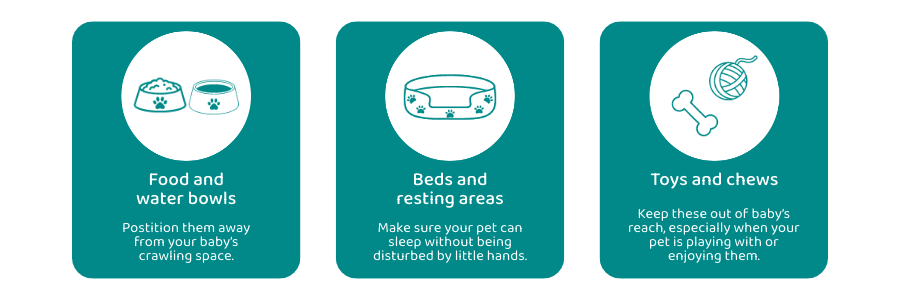
These small changes can help prevent unwanted interactions and gives your pet more opportunities to relax.
4. Learn what your pet is telling you
As your baby becomes more mobile, it's worth paying attention to how your pet responds when they approach.
Your pet might move away, hide or become very still if they're uncomfortable. These behaviours can be easy to miss when you are naturally focused on your baby's next move.
Rather than waiting for your pet to get overwhelmed, look out for changes in their behaviour and respond early. For example, if they move away, allow them to without your baby following them.
Remember: Body language can vary between animals. Look at your pet's overall behaviour and the situation they are in, rather than relying on one sign alone.
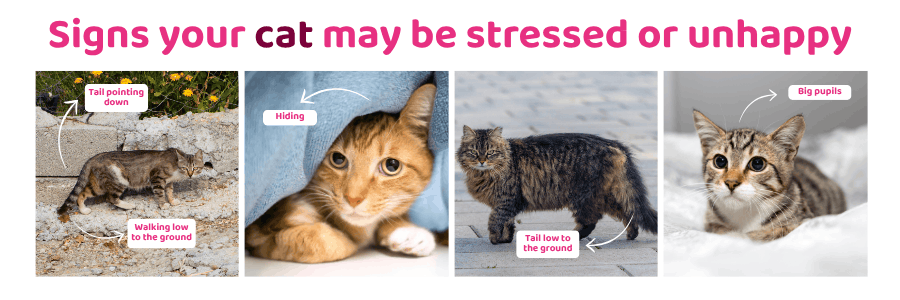
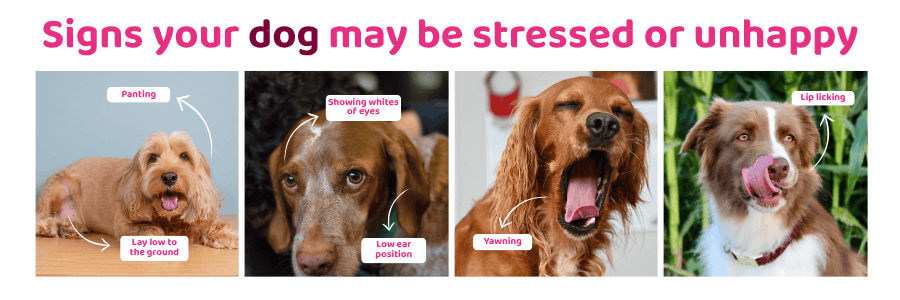
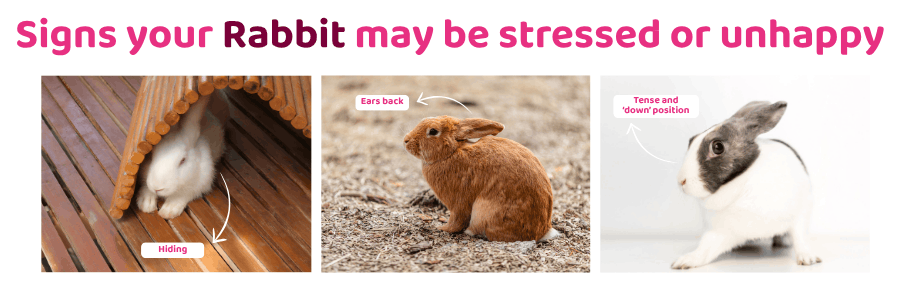
Find out how to recognise your pet's signals in our guides to dog body language, cat body language, rabbit body language and recognising stress in cats and stress in dogs.
5. Keep your pet's routine and enrichment going
Your baby becoming more mobile might mean that you need to rethink parts of your daily routine but try to keep your pet's usual activities and routine as consistent as possible.
Regular meals, walks and enrichment activities for dogs, play sessions for cats or suitable activities for small pets.
We're not saying you need to plan anything elaborate. Small, regular opportunities to explore, play and spend time with you can make a difference.
6. Help your baby learn to be gentle
Your baby won't automatically know how to interact with animals. They may reach out, grab, pull or try to follow your pet because they are curious.
As they grow and start to understand a little more, you can start showing them gentle ways they can interact with your pet, where appropriate. Stay close and help guide their hands rather than expecting them to understand boundaries independently.
If your baby does start chasing, grabbing or pulling at your pet, it is important you calmly step in and redirect them.
Important: never leave your baby alone with your pet. All interactions need to be supervised by a responsible adult. From 1 November 2026, legislation in England and Wales will prevent children under the age of 12 from being left unsupervised with a dog on the banned breeds list. Although this legal requirement applies specifically to these dogs, any dog or other pet can pose a risk to a child, which is why we recommend always supervising children around pets.
Common mistakes to avoid
As your baby starts to crawl, keep these five things in mind:
- Don’t assume nothing has changed - your pet may respond differently now your baby is moving.
- Don’t let your baby chase or grab your pet - step in and redirect your little one.
- Don’t allow your baby access to your pet's belongings - keep food, toys and resting areas out of reach.
- Don’t overlook your pets need for space - make sure they can retreat somewhere your baby can’t follow.
- Don’t expect your pet to tolerate every interaction - give them opportunities to move away and never force interactions.
Focus on protecting your pet's space, keeping their needs met and helping your baby learn how to interact safely and gently. And remember, you don't need to get everything perfect. Small changes to your home and routine can help everyone adjust as your family grows.