
It’s never a dull moment for animal lover Lucinda who has three horses, two rabbits, a cat and a dog. She’s worked at PDSA for five years and shares her experience and what a typical day looks like for her.
How did you become a vet nurse?
My career as a vet nurse started when I got a job as a trainee veterinary nurse over 16 years ago. I was studying at college once a week and working in a vet practice the rest of the time. The combination of hands-on experience and structured learning really helped build my confidence early on.
Why did you want to work at PDSA?
I wanted to work for PDSA because the charity’s mission aligns with why I became a veterinary nurse in the first place: to make a meaningful difference to pets and the people who love them.
PDSA’s commitment to ensuring that pets can access vital treatment regardless of their owners’ financial circumstances really resonated with me. I wanted to be somewhere where I could continue to develop my skills, support a hardworking team, and know that the work I do genuinely helps families who might otherwise have nowhere else to turn.
What does a typical day at PDSA look like for you?
A typical day at PDSA is always busy, varied, and incredibly rewarding. No two days are ever the same, which is one of the things that makes the role so dynamic. No matter what I’m doing, teamwork and adaptability are key. Every day brings new challenges but also the chance to make a real difference to the pets and families who rely on us.
Caring for pets
A massive part of my job is to care for and aid poorly pets who are recovering or receiving treatment. My tasks can include:
- Monitoring inpatients closely
- Administering medication
- Updating treatment plans
- Making sure pets are comfortable
Running nurse clinics
Some shifts may also include nurse clinics, where I run appointments, which include:
- Post-operative checks
- Checking their weight
- Preventive healthcare such as vaccines
- Educating pet owners about pet welfare
- Building good relationships with pet owners
Other vet nurse responsibilities
There’s so much more that can happen on a typical shift, which can include:
- Diagnostic imagery such as x-rays
- Preparing medications
- Working in the dispensary
- Supporting the clinical team
- Setting up medical equipment for surgery
- Preparing and focusing on anaesthesia
- Carrying out surgery for smaller procedures
What do you enjoy most about working at PDSA?
Being part of a charity that treats such a wide variety of cases every day is incredibly rewarding. It’s a unique and special place to work, where the focus is not only on excellent clinical care but also on compassion, empathy, and supporting communities during their most difficult moments.
What are the most common problems that pets come in for?
One of the most common problems we see pets come in for at PDSA is sore, itchy skin. Skin issues are incredibly widespread, and they can be caused by a range of things such as allergies, parasites, infections, or underlying medical conditions.
We often see pets who have been scratching, chewing, or licking at themselves to the point of causing redness, hair loss, or discomfort. It’s something we treat on an almost daily basis, and it’s always rewarding to see pets feel more comfortable again once their skin starts to heal.
What's the strangest case you have had whilst working at PDSA?
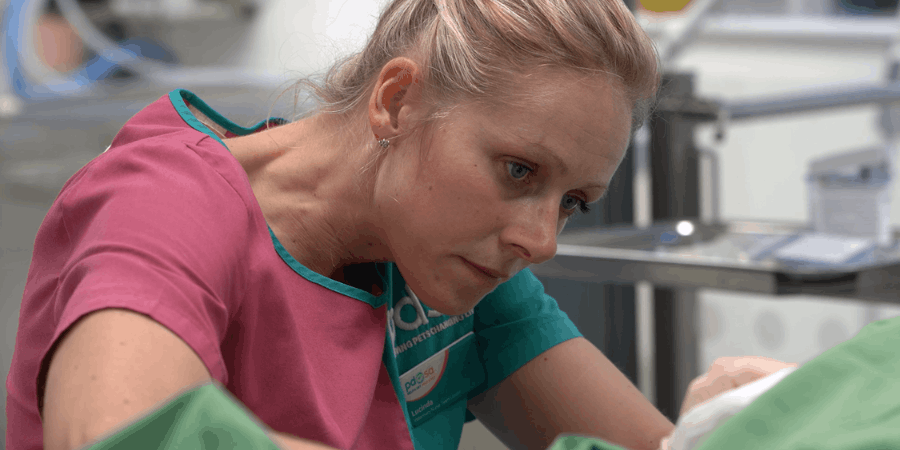
One of the strangest cases I’ve had at PDSA recently involved a dog who came in after his owner said he had swallowed a spoon. We then took some x‑rays and expected to see a tiny spoon, but he had swallowed an entire metal teaspoon!
Thankfully, we were able to remove it safely, and he made a full recovery and trotted back out of the hospital. Cases like that always remind us that pets can be full of surprises, and you never really know what you’re going to see on any given day at PDSA.
Why do you think PDSA is an important charity?
I believe PDSA is an important charity because it removes the financial barriers that prevent many pets from receiving essential veterinary care. For a lot of owners, PDSA is their only lifeline.
By providing free and low‑cost treatment, the charity helps ensure that pets don’t suffer simply because their owners are struggling financially, and that support is incredibly meaningful for the families who rely on us.
What would you say to someone who was thinking of working at PDSA?
I would say that working at PDSA is one of the most rewarding opportunities you can have as a veterinary nurse. If you’re looking for a role where you can truly utilise all your nursing skills and continue developing new ones, this is the place to be!
The variety of cases we see every day means you’re constantly hands‑on from anaesthesia and in‑patient care to x‑rays, laboratory work, emergency triage, nurse clinics, and even minor surgical procedures.
PDSA gives you the chance to use your full scope of practice and work as a vital member of a supportive clinical team. It’s fast‑paced and sometimes challenging, but the work is incredibly meaningful.
You know you’re helping pets and families who may have nowhere else to turn, and that brings a level of purpose and fulfilment that’s hard to match.