
Your pet’s tail isn’t just for wagging or looking cute… It’s an important body part that helps them maintain balance, stay warm, and communicate with us humans and other animals.
As a pet lover, learning to read tail movements can give you interesting insights into your pet’s mood and wellbeing.
Why do pets have tails?
- Communication: A pet’s tail is one of the main ways pets share their feelings. From happy greetings to signs of stress, tail language can tell you a lot about what’s going on for your pet at any moment.
- Balance: For agile animals like cats, a tail acts like a counterweight to help them stay steady when climbing, jumping, or moving along narrow spaces (such as on top of a fence or wall).
- Warmth: When it’s chilly, many pets curl their tail around their body like a cosy blanket to help keep warm.
Did you know? Puppies and kittens are born with the instinct to move their tails, and this skill develops as they grow. Puppies, for example, learn to wag their tails to show hunger and playfulness to their mother and littermates through observation and play. While instinct drives the first wags, they gradually learn to control the speed, height, and even direction of their tail movements.
What do different tail positions mean for a dog?
A dog’s tail movements are part of their body language, and tail wags can mean lots of different things.
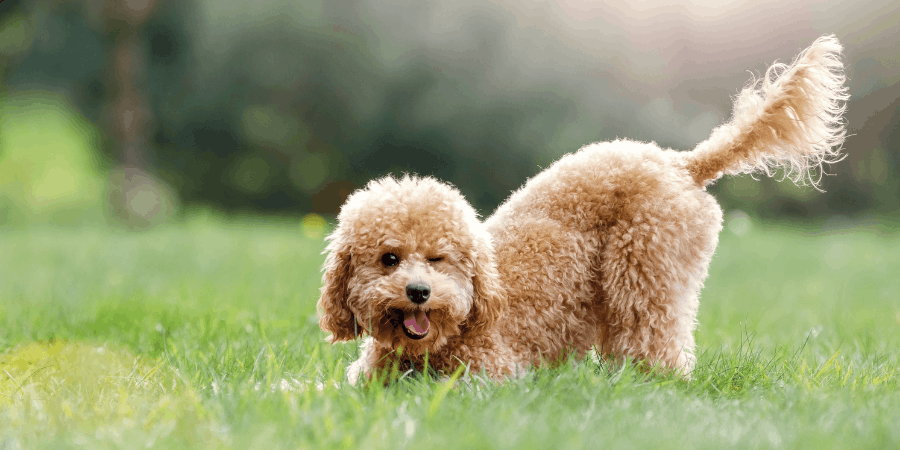
Tail expressions in dogs:
- High tail, fast wag shows strong emotion. This could mean excitement, but it might also signal tension. Looking at their eyes can give more clues: soft eyes and a wiggly body usually mean happiness, but stiff stares and posture are clear warning signs!
- High tail, slow wag is often a sign of confidence or contentment. But if the wag slows and the body becomes still, your dog might be unsure or thinking about reacting.
- Medium-high (half-mast) wags usually signal a relaxed, comfortable dog. A gentle swish around the leg level often means calm and content.
- Circular/helicopter wags are the clearest sign of joy! Many dogs often wag their tails in circular motions when they’re thrilled to see someone special.
- Low tail wags can indicate fear or discomfort. The lower and faster the wag, the more anxious your dog may feel. This is often paired with a lowered body posture or even submissive urination.
What do different tail positions mean for a cat?
Like dogs, cats use their tails as a powerful communication tool. Here’s how to spot some common signals.
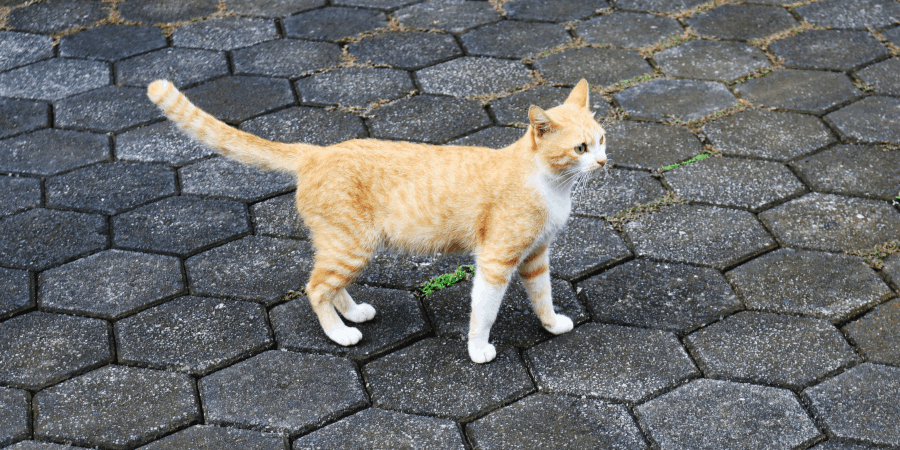
Tail expressions in cats:
- Tail pointing straight up usually means a happy, confident cat.
- Tail up and quivering could mean they’re excited to see you. If you notice spraying, however, stress levels or territorial behaviour may be the cause.
- A puffed-up tail is a sign they feel scared or threatened. Making their tail look bigger helps them to appear more intimidating to others.
- A tail shaped like a question mark often signals a friendly ‘hello’!
- Slow side-to-side wagging can mean your cat is thinking things through or is getting ready to pounce on something.
- Tail tucked under signals stress or worry.
- Quick or unusual movements can indicate pain or frustration, especially if you notice other changes like hiding, reduced appetite, or vocalising. If you notice these changes, you should speak to your vet.
- Tail wrapped around you or another cat is a sign of affection. Consider it a feline hug!
Why you should always read the whole body
What to watch for:
Tails are just one part of the conversation, and movement or position alone doesn’t tell the whole story. For example, in dogs, a happy wag usually comes with bright eyes, a relaxed mouth, and a wiggly body. A tense dog may still wag their tail, but with a rigid stance, ears back, and hard eyes. And, like dogs, cats rarely rely on their tail alone. They combine tail signals with ear position, eye contact, and posture to give a full picture of how they’re feeling.
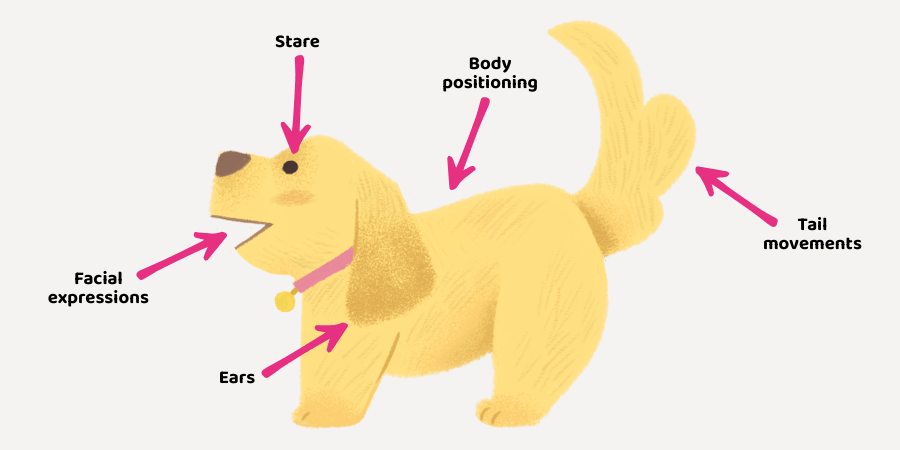
It’s our responsibility to pay attention and do our best to understand what pets are ‘saying’. When in doubt, give your pet space and time to settle, and watch for the full set of signals before approaching them.
Read more:
What about cats and dogs that have no tail?
Dogs with naturally short tails, or those whose tails have been docked, may find it harder to communicate, both with their owner(s) and other dogs, because they lose one of their key tools for expression. Because of this, their eyes, ears, facial expressions, body posture, and vocalisations become even more important cues.
Some cats are born without tails, including the Manx breed, or with very short tails, like Bobtail cats, due to a genetic mutation. Fortunately, cats with little or no tail still find clever ways to keep their balance and show how they’re feeling. They rely on their inner ear for balance and use other body language signals and vocal sounds (meows) to communicate.
If a pet loses part or all of their tail after an accident, many adapt well as, over time, they learn to compensate and use other ways to balance and communicate with you.
When to speak to your vet
If you notice sudden changes in your pet’s tail position or movement, especially alongside other signs like pain, hiding, reduced appetite, or behaviour changes, it’s best to contact your vet for advice.